Home Blog Page 2

From Idea to Execution – Cancun Intensive

0
From Idea to Execution – Cancun Intensive

PRWire:

Why Do Smart Business Owners Stay ‘Stuck’ on Decisions They Already Know They Need to Make?

BOSS Cooperative announces “From Idea to Execution,” a five-day immersive business experience in Cancun built to help owners stop deliberating and start moving.

SIOUX FALLS, S.D., June 22, 2026 — BOSS Cooperative today announced From Idea to Execution, a five-day immersive business experience in Cancun, Mexico, running September 16-20, 2026. The event brings together established business owners, professionals, entrepreneurs, and people considering a future venture to work through business and personal decisions they’ve been delaying, but know they need to make. Registration closes August 25, 2026, and the all-inclusive price is $4,997.

The format breaks from the standard business event. There’s no stage, no lineup of keynote speakers, and no networking reception where owners swap cards and forget each other by the elevator. A small group of owners and six experienced coaches spend the week together, with direct access to the coaching team from breakfast through dinner.

“Most business owners don’t need another book, podcast, webinar, or framework,” said Billie Olds, founder of BOSS Cooperative. “They already have more information than they can use. What they need is momentum. They need clarity. They need better conversations and an environment that helps them see what they’ve been missing.”

The premise is that owners usually already know their next move. The hire they need to make. The service they need to drop. The price increase they keep delaying. They just haven’t acted. The week is built to change that.

Coaching and strategy sessions are paired with shared experiences chosen for their impact on perspective, including a day exploring a thousand-year-old Mayan city and an evening navigating underground caves and rivers. Organizers say the excursion is never the point. Owners report that a decision they’d been circling for months became obvious once they were out of their usual environment and around people facing the same challenge.

“The biggest breakthroughs rarely happen when someone is sitting in a room trying to solve a problem head-on,” Olds said. “They happen in a conversation over dinner. In an experience that shifts your perspective. In a question someone asks at exactly the right moment.”

Attendees come for different reasons: some to grow, some to simplify, some to prepare for a major decision, some to figure out what comes next. The event is designed for owners and professionals across a range of fields, including trades and service businesses, professional service and accounting firms, consulting and coaching, marketing and creative agencies, real estate, and healthcare and wellness.

The $4,997 all-inclusive price covers flights from select cities, lodging, meals, excursions, and daily access to the coaching team. The event runs once a year. Because the program centers on business development, leadership, and decision-making, many attendees fund their participation through business or professional development budgets; individuals should consult their accountant or tax professional regarding their specific circumstances.

For more information, visit https://www.bosscooperative.com/cancun-boss

###

About BOSS Cooperative

BOSS Cooperative is a business education and entrepreneurial ecosystem that helps business owners, professionals, entrepreneurs, and aspiring entrepreneurs build capability, confidence, and freedom through experiential learning, coaching, community, events, and implementation-focused development. The organization works from a simple premise: action creates information, capability creates options, and options create freedom.

Open House Center Professional Counseling

0

PRWire:

Open House Center Professional Counseling

The Center for Professional Counseling Invites the Public to an Open House, June 27, 2026

A Tradition of Counseling Excellence — Celebrating Half a Century of Service to the Community, with a year-long series of events

North Hollywood, California — June 27, 2026 — The Center for Professional Counseling, an award winning, accredited, provider of affordable mental health services for individuals, couples, and families, is celebrating its 50th anniversary with a series of events to mark the milestone.   The Center invites the community to its Open House on Saturday, June 27, 2026, from 11 a.m. to 1 p.m. at 5445 Laurel Canyon Blvd, North Hollywood, CA.

Bring the whole family as there will be games and fun activities for the kids along with refreshments for all.  It will also be an opportunity to tour The Center, meet the staff and counselors; hear interns discuss their specialty in counseling, including those who focus on children, seniors, couples, trauma, parent/child communications and addictions.

Join the discussion about mental health and learn about The Center’s proven approach to treatment. For five decades, The Center for Professional Counseling has been dedicated to providing compassionate, high-quality care rooted in trusted expertise, personalized support, and a lasting legacy of excellence in mental health care.

“We honor a tradition of professional counseling rooted in integrity, experience, and genuine care—helping people navigate life’s challenges with confidence and clarity,” at The Center for Professional Counseling. “As we celebrate 50 years, our commitment to accessible care remains as strong as ever. Counseling does not need to be expensive to be effective.” Dr. Jack Mayhall, Executive Director at The Center

Celebrating 50 Years of Service

  • What: 50th Anniversary Celebration Open House
  • When: Saturday, June 27, 2026, 11 a.m. – 1 p.m.
  • Where: 5445 Laurel Canyon Blvd. North Hollywood, CA 91607
  • Cost: Free, open to the public and students training to be therapists

About The Center for Professional Counseling

For 50 years, The Center for Professional Counseling has provided compassionate, high-quality counseling to individuals, couples, and families. Guided by a tradition of professional excellence, the Center helps clients navigate life’s challenges with confidence and clarity. To learn more, visit our website at www.thecenterpro.org or call us at 818-761-2227.  Appointments are available 24/7 either in-person or via Telehealth.

Media Contact

Dr. Jack Mayhall, Ph.D., LPCC, LMFT

Campaign Creators Earns HubSpot’s Information Technology Industry Accreditation

0

PRWire:

Recognition validates Campaign Creators as a top option to help IT services providers, technology organizations, and SaaS companies implement and optimize HubSpot as a secure, integrated, and scalable customer platform.

San Diego, California — June 1, 2026 — Campaign Creators, a HubSpot Elite Solutions Partner, has been awarded HubSpot’s IT Industry Accreditation, recognizing the firm’s ability to help IT services providers, technology organizations, SaaS companies, and managed service providers (MSPs) design and operationalize HubSpot as a secure, integrated, and scalable customer platform across marketing, sales, service, data, and customer operations.

For technology organizations, the recognition matters because HubSpot success depends on more than implementation. It depends on whether the platform is architected in a way that IT teams can trust, govern, scale, and evolve without creating security, integration, data, or operational risk. That requires thoughtful CRM governance, scalable API integrations, reliable HubSpot data sync, and customer operations architecture that supports long-term growth.

Campaign Creators earned the accreditation by demonstrating technology-specific delivery, successful industry implementations, and a clear go-to-market focus in the technology sector. That proof included real-world client execution, documented customer adoption of HubSpot after implementation, and public-facing thought leadership that demonstrates how technology organizations can approach CRM governance, customer operations, API integrations, HubSpot data sync, and scalable platform architecture with greater confidence.

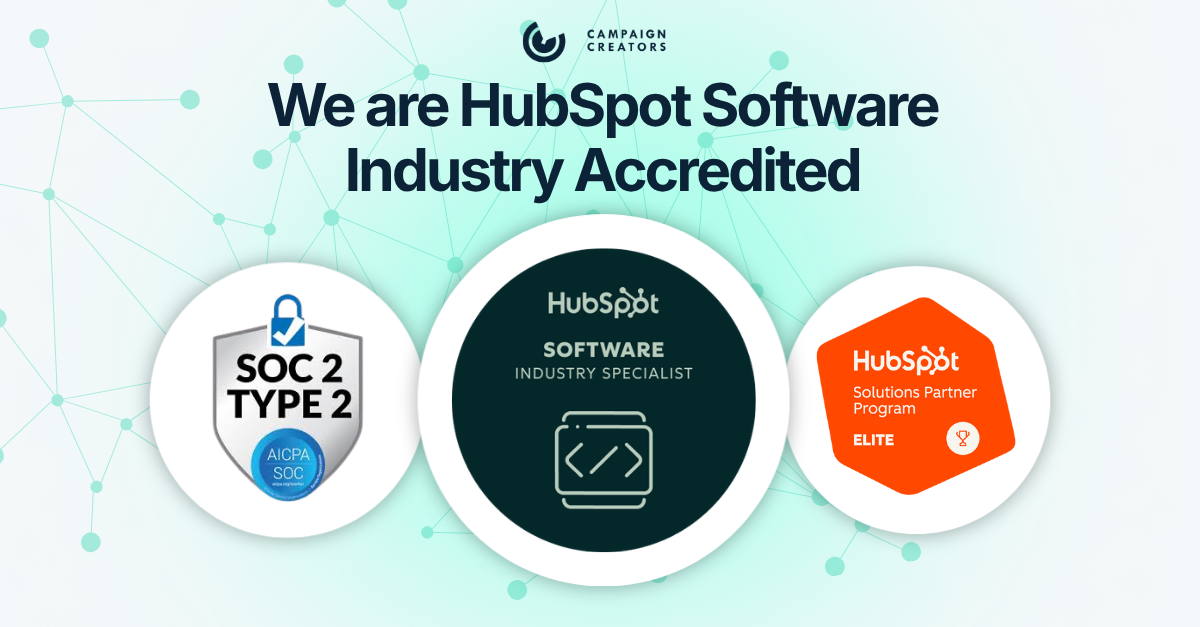
In addition to its SOC 2 Type II certification, this accreditation places Campaign Creators among a select group of HubSpot partners recognized for technology-specific expertise within HubSpot’s global network of solutions partners, positioning them as a trusted partner for IT services providers, technology organizations, SaaS companies, and MSPs that need HubSpot environments designed around governance, integrations, customer operations, data architecture, and long-term scalability rather than a generic implementation approach.

Campaign Creators Earns HubSpot’s Information Technology Industry Accreditation

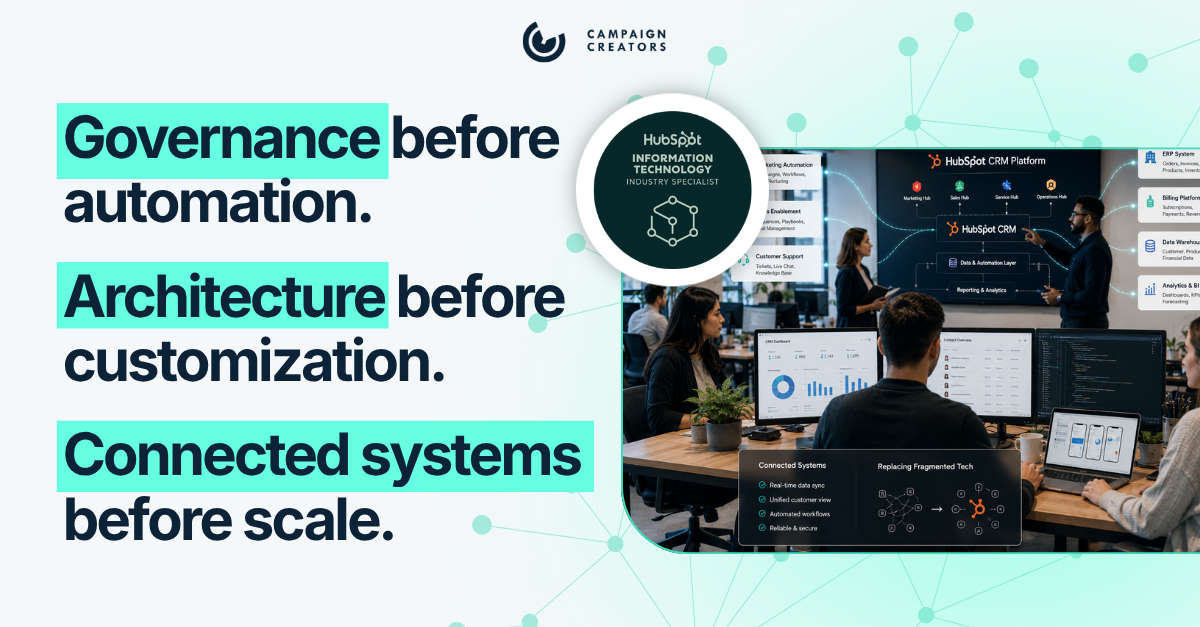
The recognition reinforces Campaign Creators’ approach to technology-focused HubSpot engagements: governance before automation, architecture before customization, and connected systems before scale. Rather than treating HubSpot like a standalone CRM, the firm helps technology organizations design HubSpot as a secure, integrated, and governable customer platform that supports marketing, sales, service, data, and customer operations across the broader technology ecosystem.

For IT services providers, SaaS companies, MSPs, and technology organizations implementing HubSpot or modernizing an existing environment, that means greater confidence in areas such as:

  • structuring HubSpot around real customer operations workflows
  • improving visibility across disconnected systems, teams, and customer data sources
  • supporting CRM governance through field-level permissions, approval processes, and audit visibility
  • designing scalable API integrations and HubSpot data sync strategies across business-critical systems
  • creating a stronger foundation for reporting, service delivery, lifecycle management, and long-term scalability

“As technology companies grow, complexity grows with them,” said Bob Afsari, CEO of Campaign Creators. “More systems, more teams, more customer data, and more operational dependencies all place greater demands on the platform. This accreditation validates our ability to help organizations build HubSpot environments that can support that growth without creating unnecessary complexity along the way.”

As more technology organizations look to improve customer operations, operational visibility, and cross-functional alignment, the need for connected systems continues to grow. This accreditation proves that Campaign Creators can help IT services providers, SaaS companies, MSPs, and technology organizations build more unified HubSpot environments designed for governance, integration, and long-term scalability, enabling the firm to continue helping its top-tier customers grow better with HubSpot.

Organizations evaluating HubSpot for IT services, technology companies, or SaaS businesses can learn more at Campaign Creators’ HubSpot for IT page:

https://www.campaigncreators.com/hubspot-for-it-services

About Campaign Creators
Campaign Creators is a HubSpot Elite Solutions Partner that designs and operationalizes HubSpot systems for organizations with growing technical and operational complexity. With capabilities spanning architecture, CRM infrastructure, integrations, migrations, and cross-hub execution, Campaign Creators helps organizations build more connected systems that support better communication, stronger adoption, and scalable growth.

Mindfulness United Appoints Joseph Russell as CEO to Lead Mindfulness.com and Mindful.org Into Their Next Chapter

0

PRWire:

Mindfulness United Appoints Joseph Russell as CEO to Lead Mindfulness.com and Mindful.org Into Their Next ChapterAward-winning app pioneer and digital product veteran joins prominent mindfulness ecosystem to deepen its global impact

BYRON BAY, AUSTRALIA—26 May 2026—Mindfulness United, the company behind two of the world’s most respected mindfulness platforms—Mindfulness.com and Mindful.org—today announced the appointment of Joseph Russell as Chief Executive Officer, effective 25 May 2026.

Russell brings over 15 years of experience building, scaling, and leading digital products and mobile technology businesses. As co-founder and CEO of DreamWalk, one of Australia’s most recognized app development companies, he helped hundreds of brands and businesses—from Coca-Cola to The Secret—design and launch successful digital experiences. Throughout his tenure, DreamWalk produced dozens of chart-topping mobile applications before it was acquired by multinational advertising group Wellcom in 2012. The brand was then re-acquired by Russell and relaunched under his leadership in 2017.

Russell has been featured by The Today Show, The Project, The Australian, Lifehacker, and Executive Style, and has written extensively on digital product strategy for Smart Company, B&T Weekly, and Inside Small Business. He has also served as a mentor and advisor to social impact startups through ygap.

He joins Mindfulness United at a pivotal moment for both the company and the broader mindfulness industry. Mindfulness.com offers daily video coaching from world-class teachers, guided meditations, and structured courses anchored by some of the most credentialed practitioners in the field. Mindful.org, now in its 15th year of publication, is widely regarded as the world’s most trusted evidence-based mindfulness magazine and digital publication. It is home to more than 4,000 articles, 230,000 email subscribers, and the long-running 12 Minute Meditation podcast, which has produced nearly 500 episodes with some of the most respected teachers and researchers in the field.

“I’ve spent my career building digital products aimed at improving people’s lives,” said Russell, “but joining Mindfulness United is a rare opportunity to create genuine, lasting change. Mindfulness isn’t a wellness trend. The science is real, the teachers are world-class, and the need has never been greater. I’m here to make sure this platform reaches everyone who needs it.”

On the broader context in which he is joining, Russell was candid about why the timing feels meaningful: “We’re living through a period of extraordinary uncertainty. The research on what mindfulness does for human resilience—our capacity to respond rather than react—has never been more relevant.”

Russell added: “Mindful.org has spent 15 years earning the trust of readers, researchers, and practitioners. Combined with an app guided by teachers who helped build the clinical science of mindfulness, that’s something genuinely rare. My job is to bring those two things together and do justice to the groundbreaking products and legacy this team has built.”

Matt Dickinson, founder of Mindfulness United, said: “Joe brings exactly the combination of skills this company needs at this moment—deep expertise in mobile product and digital growth, a genuine understanding of what it takes to engage an audience, and a personal connection to the mission. We are thrilled to welcome him to the team and excited to see what he builds.”

Russell assumes the role of CEO with immediate effect and will be based in Byron Bay.

About Mindfulness.com

Mindfulness.com is a leading meditation and mindfulness app offering daily video coaching, guided meditations, and structured courses from world-class teachers. Available on iOS, Android, and web, the platform is built on the principle that mindfulness practice should be evidence-based, taught by teachers with genuine depth of training, and accessible to everyone. mindfulness.com

About Mindful.org

Mindful.org is the world’s most trusted mindfulness publication, with 15 years of evidence-based editorial content reaching millions of readers globally. Home to m

ore than 4,000 articles, the 12 Minute Meditation podcast, expert-led courses, and an annual print magazine, Mindful.org has been the definitive English-language resource for practitioners, clinicians, educators, and researchers since 2009. mindful.org

Media Contact: Christine Fritz – Head of Marketing, Mindful.org & Mindfulness.com
christine@mindful.org

Saudia Takes Delivery of the First Airbus A321XLR in the Middle East and Africa

0
Saudia Takes Delivery of the First Airbus A321XLR in the Middle East and Africa

PRWire:

Saudia Receives Middle East and Africa’s First Airbus A321XLR

Saudia, the national flag carrier of Saudi Arabia, has taken delivery of its first Airbus A321XLR, becoming the first airline in the Middle East and Africa to receive the extra long-range narrow-body aircraft.

The delivery took place in Toulouse on Sunday, May 24, 2026, and represents a major step in Saudia’s fleet growth program. The aircraft is part of the airline’s broader investment in newer aircraft models designed to improve operational efficiency, guest experience, and sustainability performance.

What makes the Airbus A321XLR important for Saudia

The Airbus A321XLR offers a range of up to 8,700 kilometers and can operate flights of up to nine hours. This gives Saudia the ability to serve longer international routes using a narrow-body aircraft.

For the airline, this means greater flexibility in matching aircraft capacity to route demand. It also allows Saudia to expand international connectivity more efficiently while maintaining its onboard service standards.

The first aircraft to feature “The New Saudia Experience”

The newly delivered A321XLR is also the first aircraft to include core elements of “The New Saudia Experience,” Saudia’s updated onboard offering.

The new experience focuses on several areas of the passenger journey, including comfort, connectivity, entertainment, dining, and service consistency.

The aircraft cabin includes:

24 Business Class suites designed for privacy and comfort
120 Guest Class seats
13-inch personal entertainment screens in Guest Class
Enhanced seat design
Charging ports for passengers

The aircraft will also feature high-speed inflight connectivity. According to Saudia, the service is designed to support browsing, live streaming, virtual meetings, and access to major entertainment platforms.

Business Class guests will also have access to Saudia’s in-flight chef service, offering a personalized dining experience with Saudi and international cuisine.

Saudia says delivery reflects its transformation strategy

His Excellency Engr. Ibrahim Al-Omar, Director General of Saudia Group, said the delivery reflects the momentum of Saudia’s ongoing transformation.

He said the airline’s focus is not only on adding capacity, but also on investing in aircraft, products, and capabilities that strengthen Saudia’s competitiveness and support the Kingdom’s aviation ambitions.

He added that “The New Saudia Experience” brings together enhanced onboard products, service quality, and operational efficiency to deliver a more distinctive journey for guests.

Supporting Saudi Arabia’s wider aviation ambitions

Saudia Group said its fleet investments also carry wider industrial and economic value for the Kingdom.

The airline group recently signed a deal with Airbus for 105 confirmed aircraft. According to Saudia, this agreement supports local content, creates opportunities for Saudi suppliers, and strengthens Saudi participation in global aviation supply chains.

As part of the agreement, Airbus will continue working with suppliers in Saudi Arabia to support their qualification for global aviation supply chains. The aim is to help build national capabilities and generate long-term economic value beyond aircraft acquisition.

More A321XLR aircraft expected by 2027

Saudia is scheduled to add 15 Airbus A321XLR aircraft to its fleet by 2027 as part of its wider fleet growth program.

The aircraft are expected to support network growth across several travel segments, including tourism, business, major events, and pilgrim travel.

The fleet expansion also aligns with Vision 2030 and the Saudi Aviation Strategy, as the Kingdom prepares to host major international events in the coming years, including the AFC Asian Cup 2027, Expo 2030, and the 2034 FIFA World Cup.

Nairobi Summit Unlocks Billions for Africa’s Clean Energy Future

Nairobi Summit Unlocks Billions for Africa’s Clean Energy Future

PRWire:

African and French leaders have announced a major clean energy investment push in Nairobi, marking a significant step in efforts to position Africa at the center of the global green transition.

The commitments were unveiled during the Africa Forward Summit 2026, held in Nairobi, Kenya, on 11 and 12 May 2026. The summit was co-hosted by Kenyan President William Ruto and French President Emmanuel Macron, and brought together African heads of state, business leaders, investors and innovators under the theme of building a more equal Africa-France partnership.

According to the Associated Press, more than $11 billion in renewable energy investments were announced during the summit, covering projects in sustainable aviation fuel, hydropower, solar energy, wind generation and clean cooking. The wider investment package announced by Macron was valued at €23 billion, or around $27 billion, with €14 billion expected from French companies and €9 billion from African entities.

A new energy partnership takes shape

The Nairobi summit was presented as more than a diplomatic meeting. It was framed as a shift from traditional aid-based relationships toward investment, co-development and industrial growth.

For Africa, the clean energy transition is not only about reducing emissions. It is also about expanding electricity access, developing local industries, creating jobs and ensuring that the continent benefits from its own natural and renewable resources.

Kenyan President William Ruto captured this message clearly at the summit, saying that Africa has an opportunity not only to participate in the global energy transition, but also to help lead it. He added that for Africa, the energy transition must also be an industrial transition.

That distinction matters. Africa has some of the world’s strongest solar, wind, geothermal and hydropower potential, but much of it remains underdeveloped. At the same time, millions of people across the continent still lack reliable access to electricity. The challenge is therefore not simply to produce clean energy, but to ensure it supports factories, transport systems, digital infrastructure, agriculture, and local economic growth.

Major deals announced in Nairobi

Among the headline announcements was an agreement between Kenya Airways and Rubis Energy to develop what the companies described as Africa’s first sustainable aviation fuel production facility in Kenya. The facility is expected to produce around 32,000 metric tons of sustainable aviation fuel per year.

Sustainable aviation fuel is seen as an important tool for reducing emissions in air travel, a sector that is difficult to decarbonize. For Kenya, producing this fuel locally could reduce dependence on imports while opening a new industrial opportunity linked to global aviation.

TotalEnergies also announced plans to spend $10 billion in Africa by 2030. This includes a $2 billion renewable energy project in Rwanda and $400 million for clean cooking initiatives in Kenya, Uganda and Tanzania. Clean cooking remains a major development and health issue across the continent, where many households still rely on traditional fuels that can contribute to indoor air pollution.

Other announced projects included a planned 2-gigawatt hydropower project by EDF, a $350 million commitment by Global Telecom for a 250-megawatt solar plant in Zambia, and a $200 million investment by Meridian to double the capacity of Kenya’s Kipeto wind project to 200 megawatts.

Together, these announcements suggest that international investors are increasingly looking at Africa not only as a market for energy projects, but as a strategic player in the future of global clean power.

Finance remains the biggest test

While the Nairobi announcements are significant, African leaders made clear that investment commitments alone are not enough. One of the summit’s most important themes was the need to reform how global financial markets price African risk.

African governments have long argued that the continent is often treated as a high-risk investment destination, even when projects are commercially viable. This can raise borrowing costs, slow infrastructure development and make it harder to finance major energy and industrial projects.

Reuters reported that African leaders used the summit to push for easier access to credit and a rethink of risk pricing. Macron also backed the idea of a first-loss guarantee mechanism to help de-risk investment in Africa and said he would promote the proposal at the G7 summit.

This is a central issue for Africa’s energy future. Renewable energy projects require long-term capital, and high financing costs can make projects more expensive or prevent them from moving forward. If financing becomes fairer and more accessible, Africa could accelerate the deployment of solar, wind, hydropower, clean cooking and industrial energy solutions.

From aid to co-investment

The Africa Forward Summit was also politically significant. France has been trying to reshape its relationship with Africa at a time when its influence has declined in parts of the continent, especially in former French colonies in West Africa. Holding the summit in Kenya, an English-speaking country that was not a French colony, reflected a wider attempt to build a new kind of partnership.

The official summit platform described the event as a partnership “built on equal ground,” with themes including energy, finance, agriculture, artificial intelligence, the blue economy, health and industrialization.

For African countries, the message is increasingly clear: partnerships must move beyond aid, extraction and symbolic diplomacy. They must deliver infrastructure, technology transfer, local jobs, industrial capacity and fair access to finance.

For France and Europe, the summit highlights Africa’s strategic importance in a changing global economy. As demand grows for clean energy, critical minerals, digital infrastructure and new consumer markets, Africa is becoming a central arena for international investment.

A good-news story with real-world challenges

The Nairobi energy package is encouraging, but the real test will be implementation. Large investment announcements often take years to translate into completed projects. Questions remain around financing terms, environmental impact, local ownership, job creation, procurement transparency and whether communities directly benefit from the projects.

Still, the direction is important. The summit showed that Africa’s clean energy future is no longer being discussed only as a development issue. It is increasingly being treated as an investment, industrial and geopolitical priority.

If the announced projects move forward, they could help expand clean power, reduce reliance on imported fuels, support new industries and strengthen Africa’s role in the global energy transition.

Protein fibers: another sustainability breakthrough

The Good News report also highlighted a separate innovation in sustainable fashion: recyclable protein-based textile fibers developed by engineers at Washington University in St. Louis.

The research focuses on materials produced in bioreactors using genetically engineered microbes. According to Phys.org, the protein-based fibers can be recycled after use and remade into the same fibers over multiple cycles. Any microparticles released during washing would also be biodegradable, which could help reduce microplastic pollution from clothing.

This development is still at the research stage, not yet a mass-market replacement for polyester, nylon or cotton. However, it points to a promising future for fashion, where textiles could be designed from the start to be recyclable, biodegradable and less harmful to the environment.

The bigger picture

From renewable energy deals in Nairobi to protein-based fibers in the lab, the broader message is one of practical innovation. Governments, companies and researchers are no longer only talking about sustainability. They are beginning to build the systems, materials and partnerships that could make it work.

The Nairobi summit is especially important because it places Africa at the heart of that transformation. The continent is not simply a destination for outside investment. It is a source of solutions, markets, talent and renewable potential.

The coming years will show whether the pledges made in Nairobi become real projects on the ground. But the signal is clear: Africa’s clean energy future is moving from promise to strategy, and the world is paying attention.

Ebola Outbreak in DRC and Uganda: What Is Happening and How Serious Is the Risk?

0
Ebola Outbreak in DRC and Uganda: What Is Happening and How Serious Is the Risk?

PRWire:

The Ebola outbreak currently affecting the Democratic Republic of Congo and Uganda has become a serious regional public health emergency, with international agencies warning that the situation is still evolving and may be larger than official figures currently show. The outbreak is caused by the Bundibugyo virus, a rare species of Ebola virus for which there is currently no licensed vaccine or specific approved treatment.

On 16 May 2026, the Director-General of the World Health Organization determined that the Ebola disease outbreak caused by Bundibugyo virus in the Democratic Republic of Congo and Uganda constitutes a Public Health Emergency of International Concern, known as a PHEIC. WHO clarified that the event does not currently meet the criteria of a pandemic emergency.

Latest situation

The outbreak was first detected in Ituri Province, in northeastern Democratic Republic of Congo, after WHO was alerted on 5 May 2026 to a high-mortality cluster of illness in Mongbwalu Health Zone. The situation was especially concerning because deaths were also reported among health workers, raising fears of healthcare-associated transmission and possible gaps in infection prevention and control.

Laboratory testing later confirmed Bundibugyo virus disease. On 15 May 2026, DRC authorities officially declared the country’s 17th Ebola disease outbreak. The initial confirmed areas included Rwampara, Mongbwalu, and Bunia health zones in Ituri Province, while suspected cases were also being investigated in other parts of Ituri and North Kivu.

As of 21 May 2026, CDC reported that health authorities in DRC and Uganda had recorded 575 suspected cases, 51 confirmed cases, and 148 suspected deaths. These numbers include two confirmed imported cases in Uganda, including one death, in people who had traveled from DRC. CDC also noted that no further spread had been reported in Uganda at that stage.

Because this is a fast-moving outbreak, the numbers should be treated as provisional. ECDC warned that, given the recent declaration of the outbreak and uncertainty around the epidemiological picture, the true number of cases and the geographical spread may be larger than currently reported.

Why this outbreak is concerning

Ebola outbreaks are not unusual in DRC, which has dealt with multiple episodes since the virus was first identified in 1976. What makes this outbreak particularly concerning is the combination of the virus strain, the affected geography, cross-border movement, insecurity, and the limited availability of strain-specific medical countermeasures.

The virus involved is Bundibugyo virus, one of the Ebola virus species capable of causing severe disease in humans. WHO states that previous Bundibugyo virus disease outbreaks have had case fatality rates ranging from about 30% to 50%. Unlike Ebola Zaire, for which vaccines and specific treatments exist, there is currently no licensed vaccine or specific therapeutic treatment for Bundibugyo virus disease.

This means the response depends heavily on classic outbreak-control measures: rapid case detection, isolation of suspected or confirmed patients, contact tracing, safe care, infection prevention in health facilities, laboratory testing, safe burials, and community engagement. WHO said response measures already include rapid response teams, medical supplies, strengthened surveillance, laboratory confirmation, infection prevention and control assessments, safe treatment centers, and community engagement.

How Ebola spreads

Ebola does not spread like flu or COVID-19. It is not considered an airborne virus in normal community settings, and it is not spread through casual contact. Transmission requires direct contact with blood, secretions, organs, bodily fluids, or contaminated surfaces and materials from a person who is sick or has died from the disease. It can also spread through contact with infected animals, including handling or consuming bushmeat.

This is why the highest-risk situations are caregiving, healthcare work without adequate protective measures, funeral practices involving direct contact with bodies, contaminated medical equipment, and exposure to infected wildlife. WHO has warned that transmission can be amplified in healthcare settings when infection prevention and control measures are inadequate, and during unsafe burial practices involving direct contact with the deceased.

Symptoms to watch

The incubation period for Bundibugyo virus disease ranges from 2 to 21 days. People are generally not infectious until symptoms begin, which is why monitoring exposed contacts for 21 days is a central part of the response.

Early symptoms are often non-specific and can include fever, fatigue, muscle pain, headache, and sore throat. This makes early diagnosis difficult because the symptoms can look similar to malaria, influenza-like illness, or other common infections in the region. The disease can then progress to vomiting, diarrhea, organ dysfunction, and in some cases bleeding or other hemorrhagic symptoms.

CDC reported that patients in the current outbreak have experienced classic Ebola symptoms, including fever, headache, vomiting, severe weakness, abdominal pain, nosebleeds, and vomiting blood.

The cross-border risk

The outbreak is not only a national emergency for DRC. It has already crossed into Uganda through imported cases. WHO reported two laboratory-confirmed cases in Kampala, Uganda, on 15 and 16 May 2026, both linked to travel from DRC, with no apparent link between the two cases.

Ituri Province is a commercial and migratory hub and borders Uganda and South Sudan. WHO warned that the area’s mobility, trade links, insecurity, and ongoing uncertainty increase the risk of further regional exportation and cross-border transmission.

Neighboring countries sharing land borders with DRC are considered at higher risk because of population movement, trade, and travel linkages. This does not mean widespread international transmission is expected, but it does mean border screening, rapid testing, information sharing, and preparedness in neighboring countries are critical.

Why containment is difficult

The main challenge is not that Ebola spreads easily in casual settings. It does not. The challenge is that Ebola control requires speed, trust, access, and discipline. In the affected areas, those conditions are difficult to maintain.

WHO has pointed to ongoing insecurity, humanitarian crisis conditions, high population mobility, urban or semi-urban hotspots, and informal healthcare networks as factors that increase the risk of spread. These conditions make it harder to identify cases quickly, isolate patients, transport samples safely, trace contacts, and ensure that people receive accurate information.

The problem is also compounded by delayed detection. WHO said the first currently known suspected case had symptom onset on 24 April 2026, while the outbreak was only confirmed in mid-May. Several contacts reportedly became symptomatic and died before they could be isolated, and contact follow-up has been weakened by insecurity and movement restrictions.

Healthcare facilities are another critical point of vulnerability. Deaths among health workers suggest that some transmission may have occurred in clinical settings. This is especially dangerous because Ebola patients are most infectious when severely ill, and health workers may be exposed during treatment, cleaning, sample collection, or handling of contaminated materials.

Risk to travelers and the wider public

For the general public outside the affected areas, the risk remains low. CDC states that no Ebola cases associated with this outbreak have been reported in the United States and that the risk to the general public remains low.

ECDC has similarly assessed the risk for the general EU/EEA population as very low. It noted that infection requires direct contact with bodily fluids or contaminated materials, which are unlikely exposures for most travelers or expatriates if they follow recommended precautions.

However, risk is higher for people directly involved in care or response activities. This includes healthcare workers, humanitarian workers, caregivers, family members caring for sick people, and people participating in burial practices involving direct contact with bodies.

What people should do

People who have been in affected areas should monitor their health for 21 days after possible exposure. Anyone who develops fever, weakness, headache, vomiting, diarrhea, bleeding, or other Ebola-like symptoms after travel to an affected area should self-isolate and seek medical care immediately, while clearly informing healthcare providers about their travel history and possible exposure.

Travelers and residents in affected regions should avoid direct contact with sick people, blood, body fluids, contaminated materials, unsafe burials, wild animals, and bushmeat. Healthcare workers and responders should use appropriate infection prevention and control procedures, including personal protective equipment and safe handling of samples and contaminated materials.

The bottom line

The Ebola outbreak in DRC and Uganda is serious, but it should be understood accurately. It is not a casual-contact or airborne threat to the global public. The real danger is concentrated in affected communities, health facilities, caregiving environments, and cross-border areas where insecurity, population movement, and delayed detection make control difficult.

The most important priority now is containment: finding cases, isolating patients, tracing contacts, protecting health workers, engaging communities, supporting safe burials, and strengthening cross-border coordination. The outbreak is active, the case counts are still changing, and the lack of a licensed vaccine or specific treatment for Bundibugyo virus makes rapid public health action even more important.

Ebola symptoms, Bundibugyo virus, Ebola in DRC, Ebola in Uganda, Ebola outbreak 2026, how Ebola spreads, Ebola travel risk.

First City Bank Opens After $22 Million Capital Campaign

0
First City Bank Opens After $22 Million Capital Campaign

PRWire:

New Bank in Alpharetta, GA launches after strong investor support to serve communities of North Fulton County.

ALPHARETTA, GA. First City Bank opens its doors today, backed by $22 million of capital raised from community supporters and bank organizers. The bank accomplished regulatory approvals and exceeded its offering minimum in less than 90 days. The capital campaign will end May 30th or sooner if stock sales reach $25 million.

This accomplishment demonstrates strong support for the bank’s mission. More than 180 investors chose to invest in First City Bank before it opened a single account.

“The North Fulton community, our organizers and our employee team came together in less than a year to establish a bank in downtown Alpharetta. The best measure of success for a new bank in town is community support. We look forward to demonstrating our appreciation for that support.”

Bob Koncerak, Chief Executive Officer, First City Bank

North Fulton County is experiencing strong growth, and First City Bank is the first financial institution to open in Alpharetta in more than 15 years. The city is one of the fastest-growing communities in the Atlanta metro area, home to more than 35,000 jobs and a median household
income of $146,580. Its business community is prominent in technology, healthcare, professional services and finance. Despite this concentration of economic activity, small businesses in the area face challenges with accessing capital and financial expertise. First City plans to fill this void with local authority to foster growth and business management.

“Our community is in dire need of a locally owned and managed financial institution whose decision makers sit across the table from you. There are few things as frustrating as watching your financial statements being faxed to nameless underwriters in another state for credit decisions about your life and business.”

David Shafer, Chairman, First City Bank Board of Directors

First City Bank’s focus will be owner-occupied businesses across North Fulton County. The bank’s business model will promote digital services and local decision-making.
The executive team led by CEO Bob Koncerak, Experience Officer Scott Doll, Chief Lending Officer Erik Bykat and Chief Operating Officer Chris Acker bring decades of banking experience to the North Fulton market. The bank’s organizers and leadership team all live in the area and are active in community organizations.

“North Fulton has been missing the kind of banking relationship people used to have, where you know your banker and know who to call. When we began reaching out to local business leaders and investors about building one, the level of interest and support was immediate. We have lots of neighbors who were willing to become investors and be a part of this bank. So much so that we were able to complete our funding in less than 90 days!”

Steve Beecham, Chairman, First City Bank Board of Advisors

First City Bank will begin a phased rollout of products and services in the coming weeks. Marketing and advertising efforts will begin in late May.

About First City Bank
First City Bank is an FDIC insured financial institution headquartered in Alpharetta, Georgia and serves the communities of North Fulton County. Led by a team of experienced bankers, civic leaders and local investors, the bank was founded on the belief that the community deserves a banking relationship rooted in local knowledge, personal responsibility and local decisionmaking. The bank’s core values are trust, soundness, profitability and growth. First City Bank
seeks to serve as a trusted financial partner to the entrepreneurs, small businesses and families
that drive North Fulton’s growth, and investing in the community it calls home. Read more at
www.firstcitybankga.com.

Base Molecular Resonance™ Technologies Selected as Strategic Technology Partner of Tough Stump Technologies for High-Level Department of War Initiative

0
Base Molecular Resonance™ Technologies Selected as Strategic Technology Partner of Tough Stump Technologies for High-Level Department of War Initiative

PRWire:

Base Molecular Resonance™ Technologies Selected as Strategic Technology Partner of Tough Stump Technologies for High-Level Department of War Initiative

Base Molecular Resonance™ Technologies (“BMRT”), a 2026 Edisons Awards Nominee, has been formally engaged by Tough Stump Technologies (TST) as a critical technology partner in support of a global strategic initiative operating at the highest levels of the Department of War and focused on mission-critical capabilities designed to address emerging threats from advanced adversaries. Due to the highly sensitive nature of this specific effort, operational details and program specifics cannot be publicly disclosed.

BMRT Co-Founder & President, Lee Duke said, “We are honored to work alongside Tough Stump Technologies in support of this critical mission focused on protecting our nation and its allies. We believe the combination of BMRT’s validated technology capabilities and TST’s operational expertise creates a powerful partnership capable of advancing next-generation defense and battlefield awareness capabilities for an increasingly complex global threat environment.”

Jarrett Heavenston, TST CEO said,  ““BMRT’s breakthrough detection capabilities represent the kind of transformational technology that can redefine operational awareness for the modern battlefield, and we are proud to work alongside them in support of this important Department of War initiative”

BMRT’s US Government validated detection capabilities were selected to support and enhance key aspects of the broader initiative, where the Company’s technology is viewed as highly complementary to emerging operational and strategic defense requirements.

Tough Stump Technologies is a defense technology company supporting military, special operations, and government customers with advanced tactical systems, drone operations, communications, and mission support.

According to Benjamin Brown, TST President & COO, “Between BMRT’s revolutionary technology and Tough Stump’s proven understanding of the battle space, the battlefield will change forever and in favor of the US and it’s allies. ”

While the current partnership is specific to this particular Department of War initiative, both BMRT and TST view this collaboration as the first of what they hope will become numerous future strategic efforts together. The companies believe their respective technologies, capabilities, and operational expertise create a highly complementary foundation for advancing next-generation national security and defense solutions across multiple mission environments, with a shared focus on delivering transformational operational advantages for the modern battlefield and future strategic environments.

BMRT’s Co-Founder & CEO, Robert “Bo” Short added, “We want to recognize the diligent work of Adam Jarvis, our Senior Vice President of Government & Defense Programs. As a highly decorated American war hero, Adam recognized the significance of this effort from the very beginning and played an instrumental role in helping advance this  BMRT/TST initiative that can strengthen and protect this nation for years to come.”

BMRT recently completed a multi-day test series in support of a U.S. Department of War Combatant Command. The testing validated the performance of BMRT’s advanced molecular resonance detection technology across a series of rigorous and highly complex operational trials. The project manager responsible for administering the test stated, “What we witnessed this week was a revolutionary leap forward in sensor technology. It was historic.”

For more information, visit www.toughstump.com

 
Media Contact
Zeb Jaillet
Chief Marketing Officer
zebj@toughstump.com

About Base Molecular ResonanceTechnologies (BMRT)
BMRT has discovered a new area of quantum physics that utilizes resonant frequencies to detect particle interactions at subatomic levels. This technology, called Base Molecular Resonance™ (BMR™), can detect any compound or biological substance, including every element on the periodic table, and up to 200 cancers and other diseases. With over 20 years of prototyping and testing proving its unmatched detection capabilities, BMRT™ has the potential to save millions of lives by pinpointing weapons, explosives, and other physical threats both up close and at great distances and detecting cancers and other diseases long before they present clinical symptoms. The non-invasive, harmless, and instant scan has broad implications in Cancer Diagnostics, Public Safety, Law Enforcement, National Security, and Military Services. BMRT currently holds 20 patent assets and has received an independent $60.3 billion intellectual property valuation across 56 global use cases. To better understand how BMR™ technology works: Click Here

About Tough Stump Technologies (www.toughstump.com)
Tough Stump Technologies is a leading provider of advanced technology solutions for defense, security, and industrial clients. With a commitment to innovation, reliability, and operator focused design, Tough Stump delivers state-of-the-art products and comprehensive training programs that empower organizations and mission driven personnel globally. 

5Q Adds One11 Advisors to Fuel Growth Strategy Backed by Stone‑Goff Partners

0
5Q Adds One11 Advisors to Fuel Growth Strategy Backed by Stone‑Goff Partners

PRWire:

ATLANTA — May 12, 2026 — 5Q, a leading provider of end-to-end technology services for the commercial real estate industry, today announced the addition of One11 Advisors (“One11”) to its organization, effective May 1, 2026. The move unites two firms that have long operated in the same space, serving many of the same clients, with a shared commitment to the CRE industry. The addition of One11 is part of 5Q’s broader growth strategy, supported by Stone-Goff Partners, who joined 5Q as a capital partner to help build and expand the operating platform. One11, led by Jeremy Batson, brings deep expertise in application-layer technology services for CRE and multifamily operators, including data migration, application transitions, and property management software support. Where 5Q has built its reputation on IT and OT infrastructure, cybersecurity, and managed services, One11 extends the platform by adding the business applications layer that owners and operators increasingly require under one roof. As the commercial real estate environment grows increasingly complex and dependent on interconnected systems, the combined organization is positioned to serve as a single, integrated technology partner across the full property lifecycle.

“One11 has been doing this work at a high level for years, and our clients have been asking us about application services for just as long. This is the natural next step in our growth and a direct response to the needs of the clients we serve.” — Wade Hughes, CEO, 5Q

For Jeremy Batson and the One11 team, this transition represents a deliberate next step and a platform for growth. “Joining 5Q gives our team the infrastructure, client relationships, and culture to take what we have built and extend its reach. Our clients will see the same team, approach, and now a broader set of resources behind everything we do.” — Jeremy Batson, Vice President, One11

One11 clients, many of whom already work with 5Q on the infrastructure side, will now have access to a unified technology platform across both IT and application services. The combined organization brings together two teams that already understand each other, having collaborated closely across a number of shared client relationships. With Stone-Goff Partners’ support, 5Q is built to continue expanding its capabilities and team to meet the growing demands of the CRE industry.

“We are excited to partner with Wade and the 5Q team as they continue to build a differentiated technology services platform serving the commercial real estate market,” said Rob Bosco, Partner at Stone-Goff. “5Q’s vertical focus and technical expertise make the company a critical partner to its clients, and we look forward to supporting continued organic growth and strategic acquisitions.”

About 5Q 5Q is a leading provider of end-to-end technology services for the commercial real estate industry, including managed services, cybersecurity, IT management, and technology strategy. Backed by capital partner Stone-Goff Partners, 5Q helps CRE owners and operators make properties more scalable, reliable and secure by delivering real estate technology expertise at both the corporate and property level.

About One11 Advisors One11 Advisors is a managed services firm specializing in application-layer technology for commercial real estate operators, with expertise in data migration, software transitions, and support of property management platforms. One11 has built a reputation as a trusted partner to CRE operators navigating ownership changes, platform conversions, and operational complexity.

About Stone-Goff Partners  Stone-Goff Partners is a lower middle market private equity firm investing in technology-driven business-to-business service companies. We partner with company founders and executive leadership teams to provide capital, M&A origination and execution, and value-creation expertise to our portfolio companies.