Home Blog Page 40

South Carolina is behind on electric car charging but anticipate more public stations by 2025.

South Carolina is behind on electric car charging but anticipate more public stations by 2025.

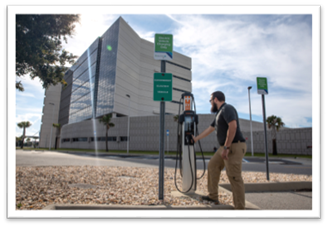
South Carolina is gearing up to increase the availability of electric vehicle charging stations by 2025. Despite the state’s aspirations to become a manufacturing hub for the electric vehicle industry, it currently lags behind many other states in terms of charging infrastructure for battery-powered cars.

To address this issue, the South Carolina Department of Transportation has secured .2 million in federal funding to expand the number of fast-charging stations along the nation’s interstate system. An additional million is expected to be allocated over the next two years to further support this initiative.

The Department of Transportation has been actively seeking input from the community on where to strategically place these new charging stations and what amenities should accompany them. The goal is to facilitate long-distance travel by providing drivers with the ability to quickly charge their vehicles and continue on their journey.

While plans are in motion to start building the new chargers by the end of this year, a potential manufacturing shortage of chargers that meet federal guidelines could impact the timeline. Any remaining funds after the installation of fast-charging stations will be directed towards serving rural areas and cities without interstate access.

South Carolina currently ranks 40th in the nation and second to last in the Southeast in terms of fast chargers per capita. The state also lags in the number of electric vehicles sold compared to neighboring states like Florida, Georgia, and North Carolina.

The Biden Administration’s National Electric Vehicle Infrastructure plan aims to address this issue by investing .2 billion nationwide to establish public charging stations every 50 miles along designated interstates. In South Carolina, this includes routes like I-26, I-20, I-77, I-85, and I-95.

While progress is underway in many states across the country, South Carolina is among the states that have yet to begin construction on new charging stations. However, plans are in place to start building the stations in preparation for a more electric vehicle-friendly future in the state.

‘Automaker Cuts Back on Electric Vehicle Production Amid Low Demand, Foresees Variable Profit Margins’

‘Automaker Cuts Back on Electric Vehicle Production Amid Low Demand, Foresees Variable Profit Margins’

General Motors (GM) has adjusted its electric car production target for 2024 and shifted its profit goals due to lower-than-expected demand for electric vehicles (EVs). The company’s Chief Financial Officer, Paul Jacobson, revealed that GM will now aim to produce between 200,000 to 250,000 new EV units in 2024, down from the initial target of 200,000 to 300,000 units.

Despite the demand challenges, Jacobson expressed optimism about the profitability of GM’s EVs at lower production levels. He mentioned that GM still believes its EVs can be “variable profit positive” at these levels, with variable profit being achieved when the revenue from vehicle sales exceeds the direct production costs, excluding fixed expenditures.

Speaking at the Deutsche Bank Global Automotive Industry Conference, Jacobson also announced GM’s plan to invest 0 million in Cruise, its self-driving car company, to aid in its relaunch. This investment is set to begin this month.

While demand for EVs has not grown as rapidly as anticipated, GM reported strong EV sales in May, with approximately 9,500 EVs sold. Jacobson attributed the adjustments in production and profit targets to factors driven by demand in the overall industry. While industry analysts predict that the EV market will represent more than 10% of total auto sales this year, GM expects it to be around 8%.

Jacobson emphasized the importance of aligning production with market demand to prevent overproduction and the need for deep discounts to move excess inventory. By maintaining a focus on meeting customer expectations and ensuring a sustainable growth strategy for EVs, GM aims to navigate the evolving landscape of the electric vehicle market.

Using Innovative Technology to Strategize Tree Planting for Climate Resilience.

Using Innovative Technology to Strategize Tree Planting for Climate Resilience.

A new mapping system is set to assist Marion County in determining where to prioritize tree planting efforts to enhance climate resilience and combat issues like flooding, heat illness, and air pollution in underrepresented neighborhoods.

American Forests, a non-profit conservation organization, in collaboration with Keep Indianapolis Beautiful, has developed the Tree Equity Score Analyzer, a free tool that will help identify areas lacking tree canopies and guide planting initiatives.

Planting more trees can offer multiple benefits, such as moderating rising temperatures, managing stormwater to prevent flooding, and purifying the air. Joshua Simon from American Forests highlighted that the tool takes into account environmental benefits and socioeconomic factors to pinpoint the most critical locations for tree planting.

Recognizing the disproportionate impact of climate change on marginalized communities, Simon emphasized the importance of planting trees as a means to combat these challenges.

Partnered with Keep Indianapolis Beautiful, American Forests will implement the tool on the ground to engage the community in tree planting efforts. Carly Weidman from KIB expressed excitement about using TESA to raise awareness and facilitate informed discussions about tree equity citywide.

Given the recent record-breaking heat in Indianapolis, the significance of trees in mitigating climate impacts cannot be understated. Stephanie Freeman-Day from Indiana University highlighted the link between urban tree canopies and climate change resilience, stressing the need for equitable distribution of trees in urban areas.

The Tree Equity Score Analyzer is a valuable resource for communities planning tree planting projects. It offers insights into areas that lack tree canopies and supports efforts to address climate change effects. To access the tool, visit treeequityscore.org/analyzer/indianapolis.

The initiative underscores the critical role of trees in enhancing environmental resilience and fostering community well-being. By strategically planting trees, Marion County aims to build a more sustainable and climate-resilient future for all residents.

Starling Bank’s profits increase by 55% due to higher rates

Starling Bank’s profits increase by 55% due to higher rates

Starling Bank, a British digital bank, reported a significant increase in pre-tax profit for the year ending March 31. The bank’s profit surged to 301.1 million pounds, marking a remarkable 55% rise compared to the previous year. This milestone represents the third consecutive year of profitability for the digital bank.

Interim CEO John Mountain attributed the growth in profit to higher interest rates, describing them as a “strong tailwind” for the bank. In addition to the boost from interest rates, Starling Bank also experienced an expansion in its customer base. The number of customer accounts increased to 4.2 million, up from 3.6 million in the previous year.

The financial success of Starling Bank reflects the growing popularity of digital banking services and demonstrates the bank’s ability to capitalize on market trends. With a focus on customer experience and financial innovation, Starling Bank has positioned itself as a key player in the competitive banking industry.

Overall, the impressive financial results of Starling Bank highlight its strong performance and strategic growth initiatives. As the digital banking sector continues to evolve, Starling Bank remains well-positioned to drive further success and expansion in the future. ( = 0.7847 pounds)

Big changes in packaging of chicken and fish aimed at reducing waste

0

Sainsbury’s is making significant changes in its stores in an effort to reduce waste and become more environmentally friendly. One of the major changes includes the introduction of pulp trays for some fish items, a first for supermarkets. These trays will be used for all salmon and trout products, reducing plastic usage by 70 percent and making them easy to recycle at home. Additionally, plastic trays for fresh breaded chicken and Taste the Difference breaded fish will be replaced with cardboard ones.

The initiative is expected to save 646 tonnes of plastic annually, with a further 48 tonnes reduced by changing the packaging for the Taste the Difference breaded fish fillets. These changes will be rolled out across all Sainsbury’s stores in the coming months, appearing on popular summer staples like finger foods and the BBQ range. Claire Hughes, Director of product and innovation at Sainsbury’s, emphasized the importance of reducing plastic waste and working towards sustainable goals.

Furthermore, Sainsbury’s will now feature a ‘Good to Know’ logo on items that are more sustainable, helping customers easily identify products with reduced plastic packaging. The supermarket has also made other sustainable moves, such as using cardboard punnets for own brand mushrooms and replacing plastic steak trays with cardboard alternatives.

It’s not just Sainsbury’s that is prioritizing sustainability in the UK. Aldi has launched its own brand paper gin bottle, which is easier to transport, recyclable, and five times lighter than a standard glass bottle. The gin, made from 94 percent recycled paperboard and lined with a food-grade pouch, is now available for purchase. These changes mark a significant step towards reducing plastic waste and promoting a more eco-friendly approach in the retail sector.

Black & White Bridging team grows with new relationship specialists

0
Black & White Bridging team grows with new relationship specialists

Black & White Bridging, a specialist short-term lender known for its transparent approach, has recently appointed Greg Applewhaite as its relationship manager for the North of England. This appointment is part of the company’s strategic focus on growth, which has also seen other new hires in the past 18 months.

Based in Manchester, Applewhaite brings five years of experience in specialist finance, having held business development roles at companies such as Together, SoMo, and ASG. In his new role, he will work closely with brokers to structure complex deals, improve conversion rates, and strengthen relationships.

Applewhaite expressed his excitement about joining Black & White Bridging, highlighting the company’s recent pricing refresh for its bridging business to increase competitiveness. He emphasized Black & White’s excellent reputation for service and quick turnaround times, aligning with his own commitment to clarity and efficiency in business dealings.

Danny Power, director of business development at Black & White Bridging, praised Applewhaite’s expertise in relationship management and deal structuring, noting that he will be a valuable asset to both the team and the brokers they work with.

With Applewhaite on board, Black & White Bridging looks forward to further driving success and enhancing its reputation in the industry. The company’s ethos of ‘no grey areas’ resonates with Applewhaite’s approach, reflecting a shared commitment to professionalism and service excellence.

Update on construction and development activities of Octopus Renewables Infrastructure Trust Plc

0
Update on construction and development activities of Octopus Renewables Infrastructure Trust Plc

Octopus Renewables Infrastructure Trust plc has provided an update on its construction and development activities, showcasing progress in various renewable energy projects.

The Breach Solar Farm in Cambridgeshire, UK, a 67 MW project, is in the final stages of commissioning. The site has begun exporting electricity to the grid and is expected to reach full export generation capacity by June. With a 10-year power purchase agreement in place with Iceland Foods Limited, the farm will supply 100% of its production at a fixed price linked to UK inflation (CPI).

In February 2024, the company acquired a 199 MW complex of solar farms near Dublin, Ireland, including the 42 MW fifth site called Harlockstown. Upon passing required performance and handover tests, Octopus Renewables Infrastructure Trust will acquire the Harlockstown extension from Statkraft Ireland in Q3 2024. Microsoft has also signed on as the off-taker for production from this project, continuing existing agreements with the first four sites.

Octopus Renewables Infrastructure Trust’s investment in Simply Blue Group, an Irish renewable energy developer focused on floating offshore wind projects and sustainable fuels, has amounted to €7 million in the current funding round. With this investment, the company will own approximately 20% of Simply Blue Group. The funding, structured as a convertible loan, aims to support Simply Blue Group in developing its pipeline of offshore wind and sustainable fuels projects, while also securing long-term strategic funding for future construction-ready stages. Partnering with another fund managed by Octopus Energy Generation, Sky (ORI SCSp), which is also investing €7 million and acquiring a 20% stake in Simply Blue, further bolsters the initiative.

In the green hydrogen sector, the joint venture HYRO Energy Limited, established by ORIT, Sky, and Renewable Energy Systems, is moving forward with the Northfleet hydrogen production project. Expected to be ready for construction in 2025, HYRO has also submitted two projects for consideration in the UK Government’s second hydrogen allocation support round, with outcomes anticipated in Autumn 2024. This progress follows the successful submission of the Northfleet project in the first round (HAR1) in December 2023.

The Changing Landscape of No-Deposit Bonuses in Casino Promotions

The Changing Landscape of No-Deposit Bonuses in Casino Promotions

No-deposit bonuses have been a long-standing feature in the online casino industry, offering players a risk-free way to discover new gaming platforms. These promotions have undergone significant transformations over the years, adapting to changing market conditions, player preferences, and technological advancements. In this article, we will explore the evolution of no-deposit bonuses, particularly for Canadian players in 2024.

The Early Days of No-Deposit Bonuses

In the early days of online casinos, no-deposit bonuses were straightforward: players received a small amount of bonus credit upon registration without the need to make a deposit. These bonuses, typically ranging from to , allowed players to explore the casino’s offerings without any financial commitment. The primary aim was to attract new players and introduce them to the platform.

Early Challenges and Limitations

Despite their appeal, early no-deposit bonuses had limitations such as high wagering requirements and strict withdrawal conditions, making it challenging for players to convert their winnings into real cash. However, the allure of playing for free kept players engaged, making no-deposit bonuses a common promotional tool in the industry.

The Rise of Live Casino Games

With the introduction of live dealer games, the online casino experience was revolutionized. Evolution Gaming, a leading provider of live casino games, played a pivotal role in this transformation by offering players the opportunity to enjoy immersive casino games streamed live from studios. Games like Live Blackjack, Live Roulette, and Live Baccarat allowed players to interact with real dealers and other players, bringing the social aspect of land-based casinos to the online realm.

Evolution of No-Deposit Bonus Structures

No-deposit bonuses have evolved beyond simple bonus credits to include a variety of offerings such as free spins, free play, and cashback bonuses. These diverse bonus types cater to different preferences and provide players with more options to enjoy their gaming experience.

Improved Wagering Requirements

One significant change in no-deposit bonuses is the improvement in wagering requirements. Many casinos have reduced their wagering requirements, making it easier for players to withdraw their winnings. This enhancement has made the bonuses more player-friendly and attractive.

The Role of Technology

Advancements in technology, particularly in mobile gaming, have influenced the availability and accessibility of no-deposit bonuses. Players can now claim and use these bonuses directly from their mobile devices, enhancing convenience and flexibility. Additionally, enhanced security measures and fairness protocols ensure a safe and transparent gaming environment for players.

Current State of No-Deposit Bonuses in 2024

No-deposit bonuses continue to be popular among Canadian players, with top online casinos offering attractive promotions to attract and retain players. Exclusive offers tailored to Canadian preferences, responsible gaming measures, and easy claiming processes have made these bonuses a valuable tool in the online gaming landscape.

In conclusion, the evolution of no-deposit bonuses has greatly enhanced the online gaming experience for Canadian players. With advancements in technology, diverse bonus offerings, and improved player benefits, these promotions continue to provide players with exciting and risk-free opportunities to enjoy their favorite games. Whether you are a new player exploring a casino or a seasoned player seeking new promotions, no-deposit bonuses remain a valuable asset in the world of online gaming. Stay informed about the latest offers and enjoy a rewarding gaming experience.

Pros and Cons of Living in Manhattan: Is it the Right Choice for You?

Pros and Cons of Living in Manhattan: Is it the Right Choice for You?

Living in Manhattan can be a dream come true for many people, with its vibrant culture, endless job opportunities, convenient transportation, top-notch educational institutions, and world-class healthcare facilities. However, there are also drawbacks to living in this bustling city, such as high living costs, crowds, limited space, traffic congestion, competitive environment, extreme weather conditions, and limited access to nature.

On the positive side, Manhattan boasts a lively culture that caters to a variety of interests, from art to music and food. The city is a melting pot of different cultures, offering something for everyone. Job opportunities abound in Manhattan, with numerous Fortune 500 companies and startups calling the city home. The public transportation system is excellent, making it easy to get around the city, and essential services are easily accessible. Manhattan is also home to some of the best universities and schools in the world, making it an ideal place for families looking to provide their children with a high-quality education. Additionally, investing in Manhattan real estate can be lucrative in the long run, as property values tend to appreciate over time.

However, living in Manhattan comes at a cost. The city is known for its high living expenses, including steep property taxes and rent prices, as well as pricier everyday items like groceries and dining out. The city is also crowded and noisy, with limited personal space and constant noise pollution. Space constraints in Manhattan mean that most apartments are small, and navigating the city’s traffic can be a challenge, even with its robust public transportation system. The competitive atmosphere in Manhattan can be overwhelming, and the extreme weather conditions may not appeal to everyone. Additionally, access to nature is limited in Manhattan, with few opportunities for outdoor activities compared to suburban or rural areas.

When considering a move to Manhattan, it’s essential to weigh the pros and cons based on your career goals, lifestyle preferences, family needs, and financial situation. Reflecting on these factors can help you make an informed decision about whether Manhattan is the right fit for you. Ultimately, Manhattan offers a unique and exciting living experience, with a mix of challenges and opportunities that may appeal to those looking for a dynamic city lifestyle.

Collaborative Research and Development

Collaborative Research and Development

Cheryl V. Reicin, a prominent figure in the life sciences industry, has been appointed as the International Chair of Mintz’s Life Sciences practice. With a wealth of experience and expertise, Reicin serves as a trusted advisor to life sciences companies and major investors across the United States, Canada, and various other countries worldwide. Specializing in representing biotechnology, medical device, and health technology companies at various stages of development, Reicin also works with venture capitalists, investment banks, and academic medical centers.

Her extensive knowledge and strategic guidance have proven invaluable to her clients, helping them navigate the complex and ever-changing landscape of the life sciences industry. With a strong track record of success, Reicin is recognized for her dedication to driving innovation and growth within the sector.

As the newly appointed International Chair of Mintz’s Life Sciences practice, Reicin is poised to continue making a significant impact on the industry, providing top-tier legal counsel and strategic direction to clients seeking to thrive in the competitive life sciences market.