Home Blog Page 79

The Impact of Sensors on Supply Chain Management

The Impact of Sensors on Supply Chain Management

In today’s ever-changing supply chain management landscape, the incorporation of sensors has become a game-changer. Sensors, with their capability to monitor, track, and transmit real-time data, are disrupting the traditional methods of managing supply chains.

The role of sensors in supply chain management is multifaceted, with applications spanning across various industries. These devices can monitor critical factors like temperature, humidity, location, and motion, providing essential data points that ensure the smooth operation and efficiency of supply chains.

Sensor technology in supply chain management operates on the principles of data collection, transmission, analysis, automation, and integration. By collecting real-time data on various conditions, transmitting it through communication technologies, analyzing it to derive insights, and integrating with other technologies like IoT and AI, sensors enhance decision-making processes in supply chains.

One of the key applications of sensors in supply chain management is inventory management. Sensors such as RFID tags and IoT-enabled devices offer real-time visibility into inventory levels, helping businesses to optimize stock levels, reduce excess inventory, and prevent stockouts. Additionally, sensors play a crucial role in cold chain monitoring in industries like pharmaceuticals and food, ensuring the temperature integrity of perishable goods during transportation.

Moreover, sensors enhance traceability in the supply chain, providing detailed information on the journey of products from production to delivery. This transparency is essential for ensuring product safety and authenticity, particularly in sectors where it is critical.

The impact of sensors on supply chain efficiency and resilience is substantial, as evidenced by studies showcasing reductions in logistics costs, improvements in inventory accuracy, and service level enhancements. Sensors enable predictive maintenance, risk management, and accuracy in delivery timelines, resulting in improved customer satisfaction.

Despite the numerous benefits of sensor technology in supply chain management, challenges such as high implementation costs, data security, integration complexity, and data overload must be carefully addressed. Overcoming these challenges is crucial for maximizing the efficacy of sensor technology in supply chains.

Recent studies and developments in sensor technology highlight the integration of sensors with blockchain, smart packaging solutions, and edge computing to further enhance supply chain visibility and efficiency. Looking ahead, the future of sensors in supply chain management holds promising advancements in AI integration, IoT expansion, and sustainability initiatives to create more efficient, responsive, and sustainable supply chains.

In conclusion, sensors have transformed the landscape of supply chain management, offering unparalleled visibility, efficiency, and resilience. As technology continues to evolve, the integration of sensors with advanced technologies opens up new possibilities for optimizing supply chains and driving innovation in the industry.

FTX Proposes 0M Payment to IRS, Seeks Reduction from B Just Announced

FTX Proposes 0M Payment to IRS, Seeks Reduction from B Just Announced

The cryptocurrency exchange FTX, which recently filed for bankruptcy, has reached a preliminary agreement with the United States Internal Revenue Service (IRS) to settle a billion tax dispute. The proposed deal, subject to court approval, would significantly reduce the amount owed to the tax authorities and establish a repayment schedule.

The resolution of this tax issue is a crucial step for FTX as it navigates through the bankruptcy process. The agreement with the IRS signals a willingness to cooperate and address outstanding financial obligations. This development may also have broader implications for the cryptocurrency industry, highlighting the importance of compliance with tax regulations.

While the details of the agreement have not been publicly disclosed, the parties involved appear to be working towards a mutually acceptable solution. Once approved by the court, the terms of the deal will determine the path forward for FTX in resolving its tax liabilities and restructuring its financial obligations.

Overall, this news demonstrates the complexities and challenges faced by cryptocurrency exchanges in today’s regulatory environment. It underscores the need for clear tax compliance guidelines and proactive engagement with tax authorities to ensure financial stability and legal compliance within the industry.

Bain Capital Crypto raises second fund: deposit

Bain Capital Crypto raises second fund: deposit

A new crypto fund, co-directed by Stefan Cohen and Alex Evans, is focusing on startup investments and liquid tokens in the Decentralized Finance (DeFi) and Web3 sectors. The fund has already invested nearly 0 million in projects and is actively participating in protocol governance.

Stefan Cohen and Alex Evans are heading the first of its kind fund that is dedicated to supporting startups and liquid tokens in the DeFi and Web3 sectors. With a focus on investing in innovative projects, the fund has already injected close to 0 million in various ventures. Additionally, the fund is actively involved in the governance of protocols within the industry. This strategic approach allows the fund to not only invest in promising projects but also to have a say in the direction of the protocols they support.

Utah Now Accepting Applications for Colorado River Basin Salinity Control Program

Utah Now Accepting Applications for Colorado River Basin Salinity Control Program

The U.S. Department of Agriculture’s Natural Resources Conservation Service in Utah is now accepting applications for the Colorado River Basin Salinity Control Program (SCP). This program, available through the Environmental Quality Incentive Program (EQIP), is open to agricultural producers in Carbon, Daggett, Duchesne, Emery, and Uintah Counties.

The Colorado River and its tributaries supply water to millions of people for various uses, making it essential to manage salinity levels. Elevated salinity in the river can cause significant harm to agricultural, municipal, and industrial water users. Salinity projects focus on improving irrigation systems to reduce salt loading in the Colorado River.

Applications for the program must be submitted by July 5, 2024. To expedite the process for qualifying applications, ACT Now will be implemented. More information about the NRCS Utah EQIP program can be found on their website.

Eligible applications received after the deadline may still be considered later in the fiscal year. Producers must have up-to-date farm records with the Farm Service Agency and submit a complete program application to be eligible. Those interested are encouraged to reach out to their local USDA Service Center for assistance.

The Colorado River Basin Salinity Control Act of 1974 authorized federal funding for salinity control projects in the region. Studies have shown that improving irrigation systems to increase efficiency is the most cost-effective way to control salinity. In Utah, five Salinity Control Units were established through this act, and the NRCS continues to manage salinity control in the Colorado River Basin.

USDA is committed to providing equal opportunities for all in this program. Interested producers are urged to apply and help in the effort to manage salinity in the Colorado River.

‘Contest Winner Donates K to Sarasota Cancer Foundation’

‘Contest Winner Donates K to Sarasota Cancer Foundation’

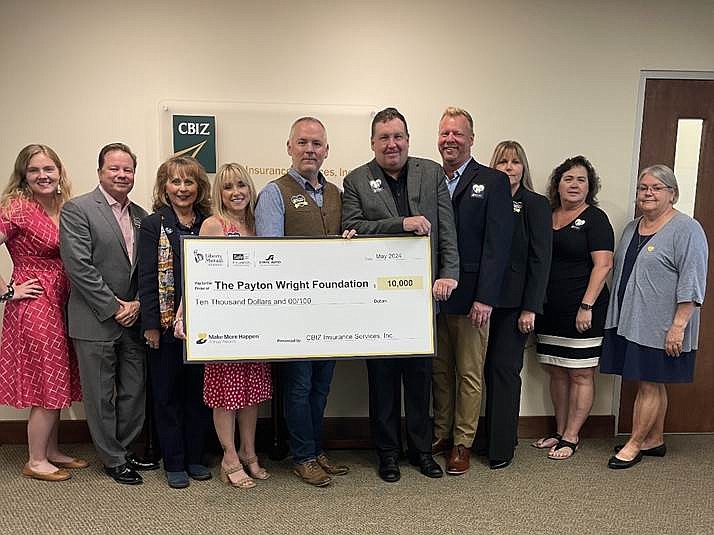
CBIZ Insurance Services of Sarasota recently raised ,000 to support families of children battling brain and spinal cord cancer, with half of the funds coming from social media support.

Initially, CBIZ Insurance was granted ,000 through Liberty Mutual and Safeco Insurance’s 2024 Make More Happen program, recognizing the company’s volunteerism. They had the chance to raise an additional ,000 by garnering the most votes on a micro-site created for selected companies. With over 1,300 votes, CBIZ Insurance emerged as the winner and received the extra ,000 for their donation.

The ,000 donation will now benefit the Payton Wright Foundation, which assists families of children with cancer by covering expenses like utilities and rent. Patrick Wright, vice president of CBIZ Insurance Services, established the foundation in honor of his daughter, Payton Wright, who lost her battle with a rare form of brain cancer in 2007.

Patrick Wright expressed his gratitude, stating, “The collective support from CBIZ Insurance Services has allowed us to support dozens of families through the hardest time in their lives. Payton would be so proud.”

Future Leaders Elevated in Cereal and Refrigerated Retail Industries

Future Leaders Elevated in Cereal and Refrigerated Retail Industries

Post Holdings recently announced key leadership changes at its Weetabix and Refrigerated Retail businesses in preparation for upcoming retirements.

Colm O’Dwyer, currently the commercial director at Weetabix, will take over as managing director on October 1, succeeding Sally Abbott. Abbott, who has been with Weetabix since 2008 and led the brand for the past nine years, will transition to a strategic advisor role until her planned retirement on March 31, 2025. O’Dwyer, who joined Weetabix in 2016 from Coca-Cola Enterprises, has steadily moved up the ranks within the company, most recently serving as commercial director and overseeing the international business.

Over at Refrigerated Retail, Mark Delahanty, the current president/CEO, will also transition to a strategic advisor role on December 1, leading up to his retirement on May 31, 2025. Mike McCoy, the executive vice president and CFO of Post Refrigerated Retail, will step into the role of president/CEO on October 1. Delahanty, who joined Post Holdings in 2016 through the acquisition of MOM Brands, has played a key role in the integration of various companies within the organization. McCoy, who has been with Post since 2014, has a background in advisory practices and has held roles in internal audit and administration within the company.

Additionally, Adam Gonsiorowski, currently the vice president of finance at Bob Evans Farms, will take over as CFO following McCoy’s transition. Gonsiorowski has been with Bob Evans Farms since 2014 and has held various finance roles within the company.

These leadership changes mark an important transition for Post Holdings as it prepares for the future in both the cereal and refrigerated retail sectors.

Get Off a Thermacell Bug Repeller for Only

Get Off a Thermacell Bug Repeller for Only

Get off a rechargeable Thermacell Bug Repeller at Target until June 22 for Circle members. The discounted price is already available without the need for coupon clipping. Originally priced at .99, it is now offered at .99, which can be further reduced to .49 with the Target Circle Card.

To take advantage of this deal, simply sign up for Target Circle for free. This exclusive discount is part of the outdoor deals section where you can find great savings on patio upgrades and camping supplies. Don’t miss out on this offer to keep those pesky mosquitoes at bay while enjoying the outdoors.

‘Cortex Strengthens with New AI and ML Studio, Snowflake Trail debut’

‘Cortex Strengthens with New AI and ML Studio, Snowflake Trail debut’

Snowflake unveiled its latest artificial intelligence strategy and a range of data management tools aimed at advancing enterprise AI capabilities while retaining its data analytics foundation. The company’s push into native applications on the Snowflake platform showcased how partners and customers can efficiently build and manage data apps.

The announcements, made during Snowflake Summit, mark a significant moment for the company as it navigates a leadership change, financial results, and ongoing discussions surrounding data breaches. Snowflake is also strengthening its commitment to open source with initiatives like the Arctic large language model and open sourcing the Polaris Catalog to enhance data interoperability. Additionally, Snowflake continues to compete with industry players like Databricks and MongoDB.

Three key themes were highlighted by Snowflake at the Summit, emphasizing simplicity and integration with AI and ML applications. CEO Sridhar Ramaswamy underscored the company’s focus on providing user-friendly innovations deeply integrated with ease of use.

Analyst Doug Henschen from Constellation Research pointed out Snowflake’s growth opportunities, especially around Snowflake-Native Applications and increasing AI and ML workloads using platforms like Snowpark Container Services and Streamlit.

Snowflake’s latest offerings at the Summit include enhancements to its Cortex AI, machine learning, and ML Studio capabilities. Cortex Analyst and Cortex Search are designed to enable enterprises to build applications on their data within Snowflake, while Snowflake AI and ML Studio offers a no-code and low-code interface for testing and deploying models. Snowflake also announced the public previews of Snowpark Pandas AIP, Snowflake Notebooks, and Snowflake Feature Store, among other enhancements tying into Nvidia AI Enterprise integration.

In addition to AI-focused updates, Snowflake introduced Snowflake Trail for improved observability, cost management interfaces, and performance optimizations to streamline data engineering workflows. Snowflake Horizon received enhancements in private preview, such as AI-powered object descriptions and automatic tag propagation.

The company is also ramping up efforts to make its platform more accessible for building and distributing data applications through Snowpark Container Services, Snowflake Native App Framework, and Serverless Tasks.

The overarching goal is to empower partners and customers to easily create and manage apps within the Snowflake ecosystem, with a focus on data security, access controls, and scalability. Snowflake’s push for native apps is expected to drive further innovation and growth within its platform, offering a seamless experience for developers and users alike.

‘Friendly’s Looks to Expand Nationally’

‘Friendly’s Looks to Expand Nationally’

Friendly’s, the casual dining chain known for its iconic ice cream and Fribble milkshake, is on a mission to expand its presence. Recently, Friendly’s Restaurants Franchising Co. LLC opened a new store in Orlando, marking the beginning of their ambitious growth plans.

Despite facing bankruptcy in 2011 and 2020, Friendly’s has emerged with a new owner, BRIX Holdings LLC, in 2021. With over 100 locations along the Eastern seaboard, including three in Florida, the brand has set its sights on expanding westward, specifically targeting states like Texas, Georgia, and the Carolinas.

The company’s strategy for growth involves introducing a fresh look in various markets, exploring co-branding opportunities, and maintaining an attractive and affordable menu with a focus on their renowned ice cream offerings. Their plans for 2025 include opening three to five new restaurants.

Sherif Mityas, CEO of Brix Holdings LLC, expressed enthusiasm for Friendly’s expansion, highlighting the new style and design concepts introduced in the Orlando location. Owned and operated by multi-unit franchisee Amol Kohli, the Orlando store is just the beginning of Friendly’s anticipated widespread growth.

With a legacy spanning over 80 years, Friendly’s continues to delight customers with signature entrees, burgers, sandwiches, and hand-crafted ice cream desserts at their full-service locations. As part of the BRIX Holdings LLC franchise portfolio, Friendly’s is poised for further success and expansion in the years to come.

‘Pittsburgh’s national patent ranking climbs to 14th place in 2023’

‘Pittsburgh’s national patent ranking climbs to 14th place in 2023’

Innovators at the University of Pittsburgh have been making significant strides in patenting their groundbreaking ideas and research. In 2023, these innovators received 114 U.S. patents, showing an increase from the 105 patents granted in the previous year. This achievement has placed Pitt at No. 14 in the national ranking for utility patents granted among universities, as reported by the National Academy of Inventors (NAI) in June.

The NAI has been publishing the Top 100 Worldwide Universities list since 2013, and last year they introduced a U.S. ranking as well. Pitt secured the No. 19 spot on the global list, showcasing the university’s commitment to innovation and entrepreneurship.

For Pitt inventors, the Office of Innovation and Entrepreneurship (OIE) provides comprehensive support throughout the entire process of bringing ideas to life. The OIE tracks patents issued each month and offers valuable commercialization resources, expert sessions, and funding opportunities to the University community.

Evan Facher, the vice chancellor for innovation and entrepreneurship at Pitt, emphasized the collaborative and meticulous process involved in developing patented innovations. He commended both the innovators and the OIE staff for their dedication in making a tangible impact on Pitt’s research endeavors.

The Top 100 U.S. Universities list aims to highlight the national innovation landscape and the contributions of academic institutions. Pitt ranks just below the University of Pennsylvania, which earned 119 patents, and ahead of institutions like Northwestern University, Cornell University, and Duke University.

Paul R. Sanberg, NAI president, stressed the importance of protecting intellectual property in maintaining competitiveness in the international innovation ecosystem. He recognized universities for their high-level innovation and emphasized the significance of patenting as a way to safeguard intellectual property.

For those interested in licensing Pitt technology or supporting the University’s translational research, they can contact partner [at] pitt.edu for more information.

The continuous success and commitment to innovation at the University of Pittsburgh showcase the dedication of its researchers and the impact their work has on the broader academic and innovation community.