Home Blog Page 43

Protecting Your Apple Data from Being Used to Train OpenAI’s AI Models

Protecting Your Apple Data from Being Used to Train OpenAI’s AI Models

Apple has recently announced a partnership with OpenAI to integrate ChatGPT with Siri. This move is aimed at enhancing the user experience by incorporating advanced AI capabilities into Apple’s voice assistant.

One of Apple’s key priorities is to ensure the security and privacy of user data, with a focus on storing data locally on its devices. This approach sets Apple apart from other tech giants and underscores its commitment to safeguarding user information.

However, the rise of generative AI and the increasing demand for cloud processing are challenging Apple’s device-centric data strategy. Advanced AI applications like ChatGPT require substantial data processing capabilities in the cloud, posing a dilemma for Apple’s data privacy efforts.

OpenAI’s ChatGPT, powered by GPT AI models in Microsoft’s cloud data centers, will soon be integrated with Siri. Apple users will have the option to send complex requests to ChatGPT, with privacy protections such as obscured IP addresses and non-storage of requests by OpenAI.

While using ChatGPT through Apple’s platform comes with built-in privacy safeguards, users who choose to connect their account may be subject to ChatGPT’s data-use policies. OpenAI’s policy allows for the use of user data for AI model training, unless users opt out through data controls.

To disable AI model training, Apple users can adjust settings within the ChatGPT app on iOS or on the web. By toggling off the option to improve the model for everyone, users can prevent their conversations from being used to train OpenAI’s models.

This partnership between Apple and OpenAI highlights the importance of balancing technological advancements with data privacy concerns. As AI continues to evolve, users are encouraged to stay informed about how their data is being used and take proactive steps to protect their privacy.


Leaders Utilize Technology to Drive Economic Growth

0
Leaders Utilize Technology to Drive Economic Growth

Leaders across the globe are increasingly recognizing the importance of embracing technology for economic growth, according to a recent study conducted by HP in partnership with Oxford Economics. The study, which surveyed executives and officials from 10 countries, found that 76% of participants believe that technology, including artificial intelligence (AI), is essential for expanding economic opportunities. Additionally, an equal percentage of respondents endorsed AI as a key driver for progress in sustainability and social impact initiatives.

The proactive stance taken by business leaders is evident, with 90% already implementing or planning to adopt AI within the next 1-2 years. Their goals include improving access to digital education, enhancing workforce development, and promoting diversity in the workforce.

Ernest Nicolas, HP’s Chief Supply Chain Officer, highlighted the transformative potential of AI, emphasizing its role in accelerating sustainable and social impact goals. From creating AI-powered PCs for first-time users to supporting data scientists in aiding local farmers, AI is seen as a tool with great promise.

In an effort to bridge the digital divide, HP has committed to empowering 150 million individuals by 2030 through digital equity initiatives. Michele Malejki, HP Global Head of Social Impact, stressed the importance of inclusive access to technology tools for all individuals to thrive in the digital economy. To date, over 45 million individuals have already benefited from HP’s digital equity initiatives.

HP’s collaboration with organizations like the World YMCA has resulted in tailored solutions to enhance digital literacy and provide access to educational resources, impacting millions worldwide. The company’s commitment extends to skills development, with programs like HP LIFE aiming to enroll 2.75 million individuals and offering new AI skills courses to equip individuals with essential business skills.

In a move to promote responsible AI usage, HP has introduced initiatives such as the HP AI in Social Impact Award, in partnership with MIT Solve, to recognize initiatives driving positive societal change through AI. Additionally, the launch of Next-Gen AI PCs tailored for work and creativity represents a significant step towards accessible AI-driven solutions.

HP remains dedicated to sustainability and social justice, striving to lead as a responsible technology provider. Through continued evaluation and strategic actions, the company aims to create a more equitable and sustainable future for all.

Promoting the Future of Humanitarian Data at the Humanitarian Data Forum

Promoting the Future of Humanitarian Data at the Humanitarian Data Forum

The inaugural Humanitarian Data Forum has been established as a new platform aimed at leveraging the power of data to aid people in need. Humanitarian efforts play a crucial role in saving lives, safeguarding communities, and instilling hope. With a staggering 300 million individuals depending on our collaborative endeavors, it is imperative that we continuously strive to enhance our impact.

Drawing on my background as an engineer and my deep-rooted commitment to humanitarian causes, I firmly believe that the judicious use of data, analytics, and artificial intelligence can significantly bolster our essential work. These technological tools have the potential to offer early warnings and expedite targeted assistance to those who require it swiftly and effectively.

The Forum presents an invaluable opportunity to shape the trajectory of humanitarian responses and build upon the groundwork laid by the Centre for Humanitarian Data, the Early Warnings for All Initiative, and the Complex Risk Analytics Fund. By pooling our collective expertise, let us endeavor to refine how we gather, integrate, and fund data to rescue and enhance even more lives.

We extend our gratitude to all participants who have come forward to join us in this noble mission. Together, let us continue to push boundaries, innovate, and catalyze positive change in the realm of humanitarian aid.

Will Pepe Reach a New Record High Soon After a Recent Surge?

Pepe Price Prediction: Meme-Based Cryptocurrency Sees Strong Recovery

Pepe, a meme-based cryptocurrency, has experienced a significant price surge in the last 24 hours. According to data from CoinGape, Pepe’s price has increased by 9% to reach [or_text model=”openai/gpt-3.5-turbo” prompt=”You are a news editor expand and Rewrite the following article, remove references to the source, make sure the generated article is well written, makes sense and is SEO enabled:

Will Pepe Reach a New Record High Soon After a Recent Surge?

Pepe price prediction: PEPE, a meme-based cryptocurrency, has seen a strong price recovery over the past 24 hours. According to CoinGape data Pepe price has surged by 9% to reach $0.00001314, showcasing a notable upward trend. Should the uptrend continue, this frog-themed meme coin could soon reach a new all-time high.

“].00001314, indicating a notable upward trend.

If this uptrend continues, the frog-themed meme coin could potentially reach a new all-time high. Investors and users of Pepe will be closely monitoring the price movement and market dynamics to capitalize on potential gains.

It is essential to note that the cryptocurrency market is highly volatile, and prices can fluctuate rapidly. Therefore, it is crucial for investors to conduct thorough research and exercise caution when trading meme coins like Pepe.

Overall, the recent price recovery of Pepe showcases the growing popularity and interest in meme-based cryptocurrencies, as investors seek new opportunities in the digital asset space. With the potential for further price gains, Pepe’s future remains optimistic for both traders and enthusiasts alike.

‘New Joint Venture Commences Decommissioning Operations for Tidal Energy Test Platform Off Orkney’

0
‘New Joint Venture Commences Decommissioning Operations for Tidal Energy Test Platform Off Orkney’

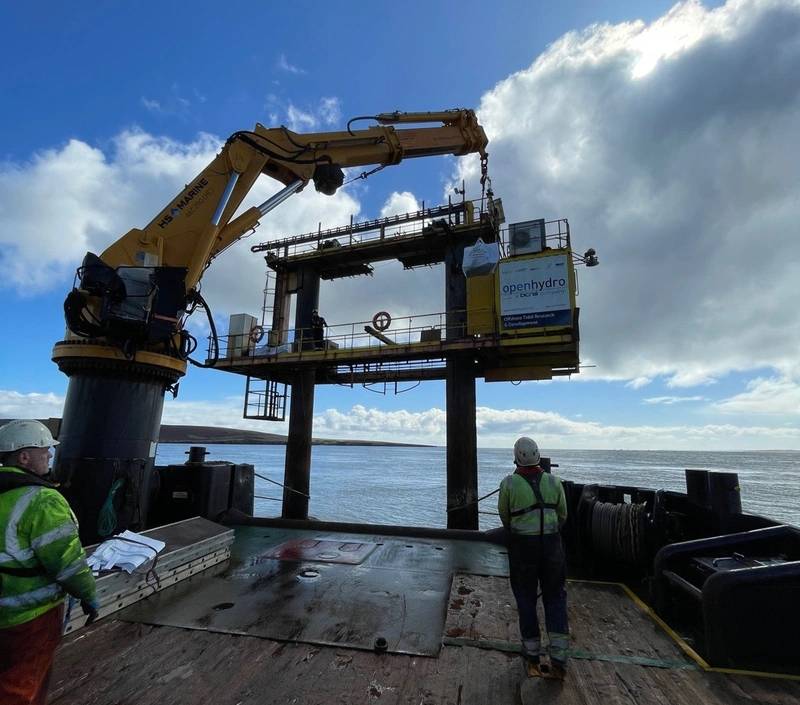
Ocean Kinetics and Green Marine (UK), two Scottish firms, have joined forces in a joint venture partnership to decommission OpenHydro’s tidal energy platform in the Orkney Islands. This project involves the removal of the steel superstructure that was installed in 2006 at the European Marine Energy Centre’s (EMEC) Fall of Warness test site.

The decommissioning contract was awarded by EMEC in early April, with Ocean Kinetics providing divers, riggers, welders, and ROV services, while Green Marine is contributing offshore management, the Green Isle vessel, moorings, and operational cable experience. The scope of work includes the removal of the steel superstructure, Diamond Wire Cutting of the piles, and cable disconnection and termination.

Both firms have extensive experience in managing various marine works, including the decommissioning of the Buchan Alpha platform and handling subsea servers, port gates, aquaculture equipment, and sunken barges. The OpenHydro superstructure has been dismantled into smaller components for removal from its static base, with the Green Isle vessel conducting a series of lifts.

According to Green Marine Operations Manager Terry Norquay, the topside infrastructure has been successfully removed, and the project is now progressing towards pile removal and cable termination. The final steps of the decommissioning process will involve cutting each pile foundation flush to the seabed using diamond wire cutting machines.

OpenHydro was a pioneer in utilizing the tidal test site at the Fall of Warness, with its 250kW tidal turbine being the first to be grid-connected in Scotland and generate electricity to the national grid in the UK. However, in 2018, Naval Energies, the parent company of OpenHydro, decided to cease further investments in tidal energy development, leading to OpenHydro’s liquidation.

As the joint venture between Ocean Kinetics and Green Marine progresses with the decommissioning project, efforts are being made to return the seabed to its original condition in compliance with the Marine Licence regulations. The collaboration between the two firms highlights their expertise in handling complex marine operations and their commitment to environmental sustainability.

South Carolina is behind on electric car charging but anticipate more public stations by 2025.

South Carolina is behind on electric car charging but anticipate more public stations by 2025.

South Carolina is gearing up to increase the availability of electric vehicle charging stations by 2025. Despite the state’s aspirations to become a manufacturing hub for the electric vehicle industry, it currently lags behind many other states in terms of charging infrastructure for battery-powered cars.

To address this issue, the South Carolina Department of Transportation has secured .2 million in federal funding to expand the number of fast-charging stations along the nation’s interstate system. An additional million is expected to be allocated over the next two years to further support this initiative.

The Department of Transportation has been actively seeking input from the community on where to strategically place these new charging stations and what amenities should accompany them. The goal is to facilitate long-distance travel by providing drivers with the ability to quickly charge their vehicles and continue on their journey.

While plans are in motion to start building the new chargers by the end of this year, a potential manufacturing shortage of chargers that meet federal guidelines could impact the timeline. Any remaining funds after the installation of fast-charging stations will be directed towards serving rural areas and cities without interstate access.

South Carolina currently ranks 40th in the nation and second to last in the Southeast in terms of fast chargers per capita. The state also lags in the number of electric vehicles sold compared to neighboring states like Florida, Georgia, and North Carolina.

The Biden Administration’s National Electric Vehicle Infrastructure plan aims to address this issue by investing .2 billion nationwide to establish public charging stations every 50 miles along designated interstates. In South Carolina, this includes routes like I-26, I-20, I-77, I-85, and I-95.

While progress is underway in many states across the country, South Carolina is among the states that have yet to begin construction on new charging stations. However, plans are in place to start building the stations in preparation for a more electric vehicle-friendly future in the state.

‘Automaker Cuts Back on Electric Vehicle Production Amid Low Demand, Foresees Variable Profit Margins’

‘Automaker Cuts Back on Electric Vehicle Production Amid Low Demand, Foresees Variable Profit Margins’

General Motors (GM) has adjusted its electric car production target for 2024 and shifted its profit goals due to lower-than-expected demand for electric vehicles (EVs). The company’s Chief Financial Officer, Paul Jacobson, revealed that GM will now aim to produce between 200,000 to 250,000 new EV units in 2024, down from the initial target of 200,000 to 300,000 units.

Despite the demand challenges, Jacobson expressed optimism about the profitability of GM’s EVs at lower production levels. He mentioned that GM still believes its EVs can be “variable profit positive” at these levels, with variable profit being achieved when the revenue from vehicle sales exceeds the direct production costs, excluding fixed expenditures.

Speaking at the Deutsche Bank Global Automotive Industry Conference, Jacobson also announced GM’s plan to invest 0 million in Cruise, its self-driving car company, to aid in its relaunch. This investment is set to begin this month.

While demand for EVs has not grown as rapidly as anticipated, GM reported strong EV sales in May, with approximately 9,500 EVs sold. Jacobson attributed the adjustments in production and profit targets to factors driven by demand in the overall industry. While industry analysts predict that the EV market will represent more than 10% of total auto sales this year, GM expects it to be around 8%.

Jacobson emphasized the importance of aligning production with market demand to prevent overproduction and the need for deep discounts to move excess inventory. By maintaining a focus on meeting customer expectations and ensuring a sustainable growth strategy for EVs, GM aims to navigate the evolving landscape of the electric vehicle market.

Using Innovative Technology to Strategize Tree Planting for Climate Resilience.

Using Innovative Technology to Strategize Tree Planting for Climate Resilience.

A new mapping system is set to assist Marion County in determining where to prioritize tree planting efforts to enhance climate resilience and combat issues like flooding, heat illness, and air pollution in underrepresented neighborhoods.

American Forests, a non-profit conservation organization, in collaboration with Keep Indianapolis Beautiful, has developed the Tree Equity Score Analyzer, a free tool that will help identify areas lacking tree canopies and guide planting initiatives.

Planting more trees can offer multiple benefits, such as moderating rising temperatures, managing stormwater to prevent flooding, and purifying the air. Joshua Simon from American Forests highlighted that the tool takes into account environmental benefits and socioeconomic factors to pinpoint the most critical locations for tree planting.

Recognizing the disproportionate impact of climate change on marginalized communities, Simon emphasized the importance of planting trees as a means to combat these challenges.

Partnered with Keep Indianapolis Beautiful, American Forests will implement the tool on the ground to engage the community in tree planting efforts. Carly Weidman from KIB expressed excitement about using TESA to raise awareness and facilitate informed discussions about tree equity citywide.

Given the recent record-breaking heat in Indianapolis, the significance of trees in mitigating climate impacts cannot be understated. Stephanie Freeman-Day from Indiana University highlighted the link between urban tree canopies and climate change resilience, stressing the need for equitable distribution of trees in urban areas.

The Tree Equity Score Analyzer is a valuable resource for communities planning tree planting projects. It offers insights into areas that lack tree canopies and supports efforts to address climate change effects. To access the tool, visit treeequityscore.org/analyzer/indianapolis.

The initiative underscores the critical role of trees in enhancing environmental resilience and fostering community well-being. By strategically planting trees, Marion County aims to build a more sustainable and climate-resilient future for all residents.

Starling Bank’s profits increase by 55% due to higher rates

Starling Bank’s profits increase by 55% due to higher rates

Starling Bank, a British digital bank, reported a significant increase in pre-tax profit for the year ending March 31. The bank’s profit surged to 301.1 million pounds, marking a remarkable 55% rise compared to the previous year. This milestone represents the third consecutive year of profitability for the digital bank.

Interim CEO John Mountain attributed the growth in profit to higher interest rates, describing them as a “strong tailwind” for the bank. In addition to the boost from interest rates, Starling Bank also experienced an expansion in its customer base. The number of customer accounts increased to 4.2 million, up from 3.6 million in the previous year.

The financial success of Starling Bank reflects the growing popularity of digital banking services and demonstrates the bank’s ability to capitalize on market trends. With a focus on customer experience and financial innovation, Starling Bank has positioned itself as a key player in the competitive banking industry.

Overall, the impressive financial results of Starling Bank highlight its strong performance and strategic growth initiatives. As the digital banking sector continues to evolve, Starling Bank remains well-positioned to drive further success and expansion in the future. ( = 0.7847 pounds)

Big changes in packaging of chicken and fish aimed at reducing waste

0

Sainsbury’s is making significant changes in its stores in an effort to reduce waste and become more environmentally friendly. One of the major changes includes the introduction of pulp trays for some fish items, a first for supermarkets. These trays will be used for all salmon and trout products, reducing plastic usage by 70 percent and making them easy to recycle at home. Additionally, plastic trays for fresh breaded chicken and Taste the Difference breaded fish will be replaced with cardboard ones.

The initiative is expected to save 646 tonnes of plastic annually, with a further 48 tonnes reduced by changing the packaging for the Taste the Difference breaded fish fillets. These changes will be rolled out across all Sainsbury’s stores in the coming months, appearing on popular summer staples like finger foods and the BBQ range. Claire Hughes, Director of product and innovation at Sainsbury’s, emphasized the importance of reducing plastic waste and working towards sustainable goals.

Furthermore, Sainsbury’s will now feature a ‘Good to Know’ logo on items that are more sustainable, helping customers easily identify products with reduced plastic packaging. The supermarket has also made other sustainable moves, such as using cardboard punnets for own brand mushrooms and replacing plastic steak trays with cardboard alternatives.

It’s not just Sainsbury’s that is prioritizing sustainability in the UK. Aldi has launched its own brand paper gin bottle, which is easier to transport, recyclable, and five times lighter than a standard glass bottle. The gin, made from 94 percent recycled paperboard and lined with a food-grade pouch, is now available for purchase. These changes mark a significant step towards reducing plastic waste and promoting a more eco-friendly approach in the retail sector.