Home Blog Page 420

Jeep Offers a Glimpse at 2025 All-Electric 600-HP Wagoneer S SUV

Back in late 2022 Jeep announced plans to roll out a handful of fully-electric models by 2025. The announcement included early concept images of these forthcoming EVs, and gave the motoring pubic an early look at the Jeep Recon, the Jeep Avenger, and the Jeep Wagoneer S — the latter of which will enter production first. And with the first of these releases now being less than a year out, the Stellantis-owned outfit has now opted to release another sneak-peek of its first-ever battery electric vehicle; the 2025 Jeep Wagoneer S. 

The upcoming Jeep Wagoneer S appears to retain much of the existing Wagoneer’s defining traits and characteristics, while taking a major technological step forward. Sporting a body that puts a sleek spin on the Wagoneer’s iconic design language — including a futuristic backlit version of the model’s iconic seven-slot grille design — the Wagoneer S maintains its gas-powered predecessors’ ample dimensions and luxury, as well as the full-size SUV’s rugged nature and solid go-anywhere capabilities, with Jeep’s 4xe setup and all-terrain management both coming as standard. At the heart of the new model is a cutting-edge 447.4-kW EV powertrain that cranks out a cool 600hp. This ultimately allows the Wagoneer S to reach 60mph from a complete standstill in just 3.5-seconds — placing it on par with many of today’s luxury sports cars.

 Jeep has yet to reveal the Wagoneer S’ battery size or range, though the concept version from late 2022 aimed to offer 400 miles of autonomy between charges. We imagine the production model will boast a similar range spec, as the 600-hp powertrain, backlit grille, 4xe setup, and all-terrain management were all present on the 2022 teaser build. What’s more, while Jeep’s latest annoucncement only shows off the BEV’s grille and hood, it appears to be nearly identical to the Wagoneer S from 2022. Based on all of the elements that have been carried over from the older 2022 iteration, we anticipate the production version to look a lot like the original Wagoneer S that was shown off alongside the Recon and Avenger. 

Jeep Offers a Glimpse at 2025 All-Electric 600-HP Wagoneer S SUV
An image of the Wagoneer S concept from 2022 (Photo: Jeep | Stellantis)

Part of parent company Stellantis’ larger Dare Forward 2030 efforts to shift to zero-emissions lineups within the next half-decade, the 2025 Jeep Wagoneer S battery electric vehicle is slated to go on sale in the U.S. in the Fall of this year, before later being released in additional global markets. And, while pricing has yet to be revealed, we anticipate a starting price of between $70,000 and  $90,000 — based on other production BEV full-size SUV pricing and the existing Jeep Wagoneer’s $62,945 starting MSRP. 

[embedded content][embedded content]

Get Fossil’s Top-Selling Smart Watch for 45% Off on Amazon Today

Where would we be without technology? No, seriously. Most of us are quite reliant on smartphones for a litany of daily tasks — everything from staying in touch with others to checking the time. But for those constantly on the move, having a smartwatch can put a smartphone’s most essential tasks right at hand and keep one from getting distracted by the iPhone’s signature flood of notifications.

This 44-millimeter touchscreen Fossil Smart Watch is perfect for those constantly on the go who want to be able to respond to calls, texts, and emails with a quick tap. Get this top-rated Apple Watch alternative for nearly 50% off today for just $162.99.

Courtesy of Amazon

The Fossil Gen 6 Smart Watch is built a lot like an Apple Watch, with a slightly more rugged design. It is compatible with all Android and iOS devices, and is compatible with the Alexa smart voice assistant so calls, texts, and other notifications can be answered with your voice.

This watch also keeps track of health-related activity, from sleeping habits to daily steps, and minutes of cardiovascular exertion. It’s an excellent choice for travelers, health nuts, or anyone looking to avoid checking one’s phone for the time but isn’t ready to strip down to analog.

What Are These Strange Red Lights NASA Spotted With The James Webb Telescope?

What Are These Strange Red Lights NASA Spotted With The James Webb Telescope?

On Earth, we get aurorae when energetic particles from the Sun are captured by the magnetic field of the Earth. These collide with gas molecules in the atmosphere and create the northern lights at certain times of year, at certain times of day, in certain parts of the country, but never localized entirely within one’s kitchen. But methane emissions are commonly found in gas giants like Jupiter and Saturn, where the heating in the upper atmosphere that powers the emissions is linked to aurorae.

The team that discovered the aurorae in brown dwarf W1935 theorizes that the emission may be facilitated by an internal process in the brown dwarf similar to the atmospheric phenomena of Jupiter, or perhaps interactions between the dwarf with nearby moons or interstellar plasma. What makes the discovery puzzling is that brown dwarfs do not have a star, so there is no obvious source of heat to the upper atmosphere that can cause aurorae.

“With W1935, we now have a spectacular extension of a solar system phenomenon without any stellar irradiation to help in the explanation,” Faherty added. “With Webb, we can really ‘open the hood’ on the chemistry and unpack how similar or different the auroral process may be beyond our solar system.”

Scientists Might Have Figured Out Origin Of Mysterious Sound Emanating From Tampa Bay Waters

Scientists Might Have Figured Out Origin Of Mysterious Sound Emanating From Tampa Bay Waters

iStockphoto / Sean Pavone

For several years, a sound emanating from the waters in South Tampa Bay have confounded locals. Now, a marine scientist from nearby Mote Marine Laboratory in Sarasota believes they have cracked the case.

Aliens? Probably not. Rowdy house parties? Some thought so because it’s a deep bass sound, but also unlikely. Dr. James Locascio from Mote Marine thinks the answer is actually pretty obvious: it’s the mating sound of a specific species of fish looking to procreate.

I grew up fishing Tampa Bay and live in Sarasota where Mote Marine is located. They have an interesting exhibit at the aquarium on City Island that’s a wall of pictures and buttons. Each picture shows a distinct species of fish and the corresponding button plays the sound that fish makes underwater. This fish and its sound are well known in the area because the Black Drum produces a very deep thumping bass sound.

FOX 13 Tampa Bay caught wind of this story and ran a report on the evening news:

[embedded content]

Over the New Year’s holiday I was about an hour south of Sarasota on Little Gasparilla Island and did some fishing. We actually caught 5 black drum in about 20 minutes (and 1 snook) while fishing from a dock.

Black Drum fish

Cass Anderson / BroBible

My buddy’s son was convinced at first that we’d caught a sheepshead which looks remarkably like a black drum but it didn’t have teeth that look like human teeth AND, more importantly, the black drum was producing that deep drumming bass sound, the same sound that’s being heard in South Tampa Bay since 2021. Here’s that sound:

[embedded content]

Dr. Locascio from Mote Marine told FOX 13 more about the sound, saying “it’s a low frequency sound, and so they travel much better and go further distances, and they go through dissimilar media more efficiently.”

One resident, Sara Healy, couldn’t make heads or tails of the mysterious Tampa Bay sound. That was until Dr. Locascio played the mating sound of a black drum for her. She said “That’s exactly what I heard. Identical in tone and rhythm.”

More work must be done to confirm that the mysterious Tampa Bay sound is coming from black drum fish but all signs indicate that’s what is happening.

A Peek Behind the Curtain at Walt Disney Imagineering’s R&D Lab

As part of the National Inventor Hall of Fame announcement ceremony, invited guests were given a tour of Walt Disney Imagineering — including their R&D lab where the most cutting edge technology is being developed for the Disney Experiences of the future. This rare glimpse behind the curtain is a bit overwhelming as the possibilities for some of the boundary-pushing innovations highlights that Disney is always trying to make the impossible a reality.

A Peek Behind the Curtain at Walt Disney Imagineering’s R&D Lab

It is no secret that Disney fans have been frustrated by the slow ramp up of new projects being announced at the domestic resorts in California and Florida. While Disney has opened major experiences internationally, Disneyland and Walt Disney World only have Tiana’s Bayou Adventure as major new attractions currently under construction. However, with Disney’s announcement of a planned $60 billion dollar investment over 10 years across domestic and  international parks as well as cruise ships, it appears that we are on the cusp on unprecedented growth.

That growth starts at Walt Disney Imagineering, where artists and engineers are dreaming up how they will tell stories across new attractions and entertainment offerings. During the tour, we were able to see some of what they are working on in areas such as robotics and a pretty nifty interactive floor. Along the way, each presenter had a glimmer in their eye that showed how much they loved showing off their toys as well as the passion they have to push the boundaries on what a Disney experience can be.

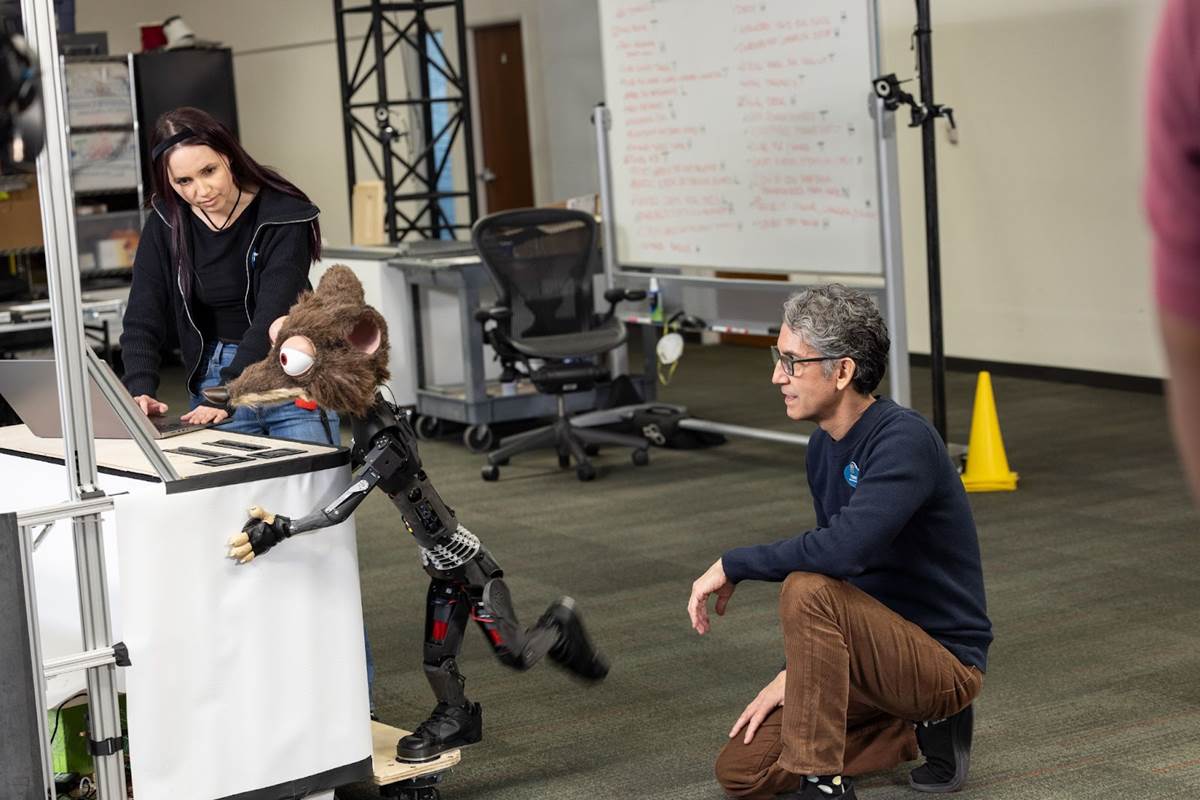
Earlier this year, Imagineering displayed a work-in-progress version of one of their new technologies. At SXSW, they presented a robotic bunny that was able to pick herself up after a tumble, while connecting to the audience on an emotional level. Continuing their work, that team went on to create the Duke Weaselton robot that recently stunned the invited guests at the opening of the Zootopia themed land in Shanghai Disneyland. 

A lot of computer programming and engineering went into creating this special moment, even though they were able to dream, design, and build the apparatus within a matter of months. But beyond the technological wizardry, they were able to work with an animator who worked on the character in the film to use their software to bring the character to life. It is mind blowing that Imagineering has developed tools that can be engineering marvels while also having the emotional connection in such a brief period of time.

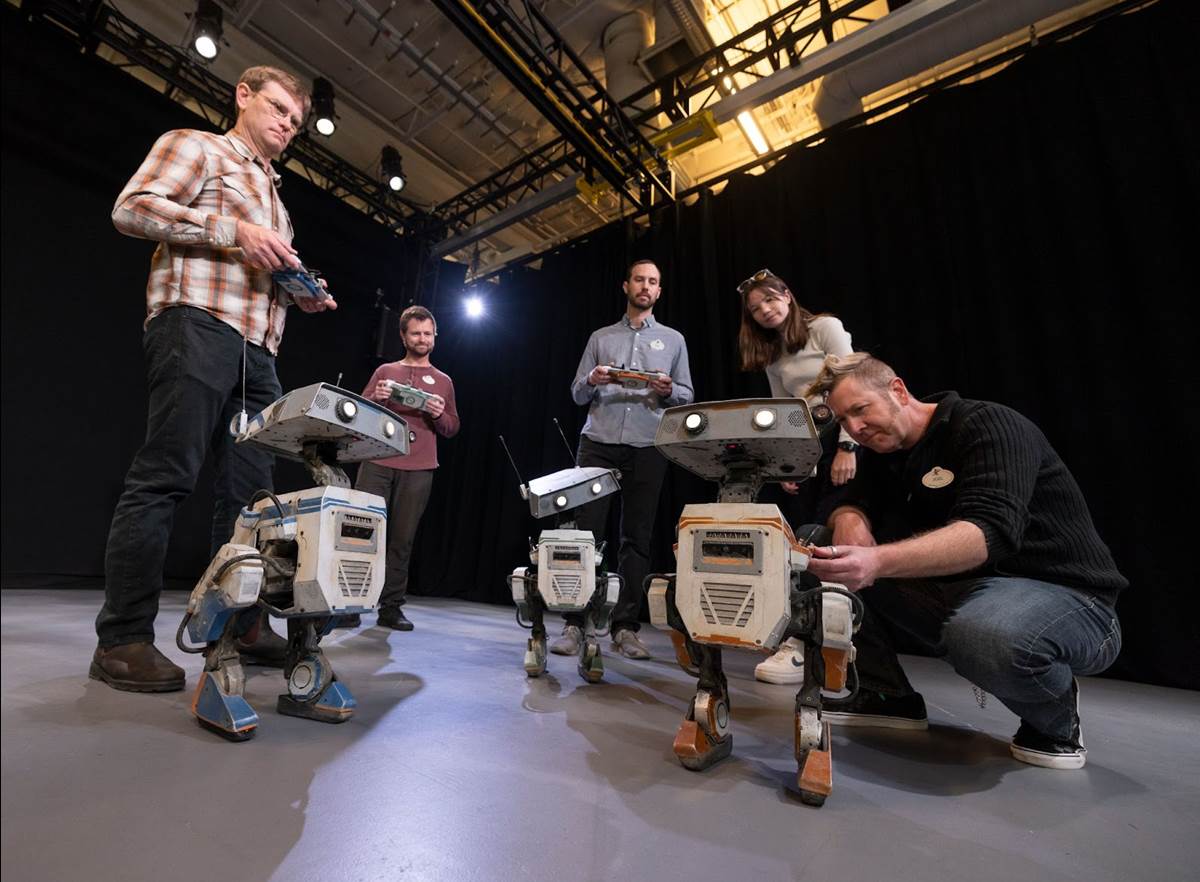
Another robotic innovation was on display which recently had a playtest inside Star Wars: Galaxy’s Edge. These charismatic droids can walk, jump, and even stay standing when being pushed, while also displaying the emotions that are a hallmark of Star Wars droids. These color coded BD units (short for buddy units) each have their own character and charm as they explore their surroundings and react to their environments in real time. It is a testament to the personal connection that Imaginners can create as most of those on the tour just wanted to pet the head of these adorable characters. You could see people transitioning from wondering how they worked to just wanting to play with their new friends.

Perhaps the biggest surprise was presented by National Inventor Hall of Fame inductee Lanny Smoot himself. The man behind the floating Madame Leota, the extendable lightsaber, and over 100 patents has his latest dream on display. The HoloTile floor is an omnidirectional modular technology that is able to keep multiple people in place by sensing where you will walk and guiding you back into place like a treadmill. Even in its development phase, the applications that were on display were endless. Imagineers could use it in the development process to walk through VR mockups of their creations. Dancers can use it to create innovative and exhilarating moves if placed at the base of a stage. Place a regular chair on the floor and you have a trackless ride vehicle that can move in every direction. We also got to see it be used as the base of an interactive droid game where the player guides a droid on a screen by walking through a virtual maze. Those strong in the force can summon and repel objects placed on the floor by using gestures. Seemingly miraculously, multiple people can be on the floor doing various things and the floor reacts to each individual’s movements.

While Imagineering isn’t quite ready to say when and where we will see this technology in the parks, the potential it has to create new experiences is only limited by their imagination. Much like the audio-animatronic figure and the omnimover ride vehicle, the HoloTile has the potential to be a theme park innovation that could inspire new stories in new ways for generations to come.

Between the theme park shutdowns and the on-again off-again relocation, it has been a tough few years for Walt Disney Imagineering. But despite the challenges, they have never stopped innovating and pushing the boundaries of using technology in immersive storytelling. With the upcoming investment, and the passion on display in Glendale, the next golden age of Disney theme park experiences may be just around the corner. As any Disney historian will tell you, the greatest innovations come from the ashes of tough times, if the recent tour of Imagineering is any indication, the next few years are going to be one heck of a ride.


Blending TikTok Art with Grasshopper

Blending TikTok Art with Grasshopper

[embedded content]

Grasshopper COMPLETE Course ✔️ https://howtorhino.com/grasshopper-course-for-architects/
Extended Tutorial👉 https://www.patreon.com/posts/96792307

This tutorial is inspired by Herschel Shapiro’s amazing TikTok sculptures and is a must-watch for anyone eager to explore the artistic possibilities of 3D printing with Grasshopper. On his Tik Tok page, Herschel shares the complete creative process behind these incredible wall decorations. That process includes 3D printing, sanding, airbrushing, coloring, assembling, and packaging. However, we noticed that one important step is missing and that is the process of 3D modeling with Grasshopper. In this video, we’re gonna break down how to create something similar in a step-by-step tutorial. Whether you’re a beginner or an experienced 3D printing enthusiast, this video is tailored to provide you with the skills and knowledge needed to create your own amazing 3D-printed art.

In the extended version of this tutorial, we’ll dive into creating Voronoi patterns on a rectangular surface. You will learn how to weld points that are close together. This trick helps us avoid short cell segments, making them much more 3D-print-friendly. Then, we’ll use multiple points as attractors. With the help of vector fields, we’ll bend our curves to make even more interesting geometry. Plus, you’ll get to learn how to sort points, especially those not aligned in a grid, first along the X-axis and then along the Y. This sorting technique is super useful for organizing elements in a specific order. Later on, this will come in handy when we engrave numbers on them, making the assembly process way easier. You can watch it on our Patreon page and support our work at the same time. With that, you will also get access to all our extended tutorials and project files.

Herschel’s pages:
Website: https://herschelshapiro.com/
YouTube: https://www.youtube.com/c/HerschelShapiro
Instagram: https://www.instagram.com/herschelshapiro
TikTok: https://www.instagram.com/herschelshapiro

How to Rhino Tutorials:
» Rhino 7 New Features [Top 10]: https://youtu.be/SeHWCUu65eU
» CADMAPPER to Rhino Tutorial: https://youtu.be/VMYuNvPJ700
» Rhino Enscape Best Practices: https://youtu.be/nnNxmbbRODQ
» Paneling Tools in Grasshopper for Beginners: https://www.youtube.com/watch?v=yH9Kffo_AmA
» Convert a set of Lines into Single Closed Brep (Grasshopper): https://youtu.be/LlsOsq_K3TM
» Create Stairs from CAD drawing in 1 click (Grasshopper): https://youtu.be/YFPJeYSKnSc
» Please DON’T watch this if you are beginner in Grasshopper: https://youtu.be/5nCBPGGTPXU
» I Turned Evolo Winner into Grasshopper script in 10 minutes: https://youtu.be/oqwhWdKfjIc
» Modeling a House from CAD drawings: https://youtu.be/aqotuhPejiA
» Creating 2D drawings in Rhino: https://youtu.be/LjKPZPN_drM
» SECRET Plugin that you’ve never heard of – REVEALED: https://youtu.be/Lo-r5aaFvZE

📌 Grasshopper Quick Getting Started Guide

Grasshopper Guide

📌 Facebook group
https://www.facebook.com/groups/howtorhino

📌 Instagram
https://www.instagram.com/howtorhino

source

A new accelerator for AI-first startups in North America

A new accelerator for AI-first startups in North America

“The Google for Startups Accelerator was amazing. We learned and improved our AI, ML, UX/UI, and marketing,” said Accelerator: Cloud alum Joon Beh, CEO of HalloAI. “In just 10 weeks, we transformed our business and increased the number of B2B clients by 900%. It was an absolute game changer for us.” Rayees Rahman, CEO of Harmonic Discovery, said his company “improved model training and inference times by 100X” thanks to Google for Startups Accelerator.

The program kicks off in April at Cloud Next 2024 and culminates with a high profile Demo Day for potential partners, customers and investors. After graduation, startups join the dynamic GFS Accelerator community, where they receive ongoing support and have the opportunity to build lasting connections with like-minded founders, mentors and investors.

Applications are open until February 15. We encourage interested and eligible startups based in North America to apply and share with your networks.

Elizabeth Penniman Named Chief of Communications at HHMI

Elizabeth Penniman Named Chief of Communications at HHMI

Elizabeth Penniman joined the Howard Hughes Medical Institute (HHMI) as Chief of Communications, effective January 8, 2024. In this role, Penniman designs and leads HHMI’s external and internal communications strategy to advance the Institute’s mission, vision, and culture.

“Elizabeth is an accomplished leader with a tremendous wealth of experience spanning nonprofit and human health communications,” says Erin O’Shea, president of HHMI. “Her expertise and her demonstrated ability to lead innovative communications campaigns will be a tremendous asset to the entire HHMI community. I am thrilled to welcome her to our leadership team, and I look forward to working closely together to further HHMI’s mission to advance the discovery and sharing of scientific knowledge for all.”

A communications professional with more than 25 years of expertise in team leadership, internal and external communications, and reputation and crisis management, Penniman most recently served as vice president of communications for the American Red Cross for nearly eight years. Prior to this role, she was senior creative director and vice president at Burson-Marsteller, a global public relations firm. 

Penniman also previously served as vice president of global communications at the Elizabeth Glaser Pediatric AIDS Foundation, where she developed communications strategies to support program, policy, and fundraising efforts in the US, Europe, and 14 countries in Africa. Earlier in her career, Penniman was a member of two US presidential administrations, serving on the White House speechwriting staff, as a policy analyst for the National Security Council, and as director of communications for the US Surgeon General. She holds a BA in political science from the University of Southern California. 

Executive search firm Bridge Partnersexternal link, opens in a new tab managed the search for HHMI.

###

HHMI is the largest private biomedical research institution in the nation. Our scientists make discoveries that advance human health and our fundamental understanding of biology. We also invest in transforming science education into a creative, inclusive endeavor that reflects the excitement of research. HHMI’s headquarters are located in Chevy Chase, Maryland, just outside Washington, DC.

Arizona State, OpenAI to collaborate on ChatGPT education use cases

Arizona State, OpenAI to collaborate on ChatGPT education use cases

OpenAI has inked its first partnership with Arizona State University in an effort to bring ChatGPT Enterprise to courses, tutoring and research.

The partnership is notable since ASU is planning to build a personalized AI tutor for students. Generative AI in education has been a hot topic as some universities have moved to ban its use. Other institutions have embraced generative AI. Meanwhile, students are using tools like ChatGPT and educational services like Chegg and Khan Academy have already partnered with OpenAI, which just launched its GPT Store

Previously: Why Chegg is using Scale AI to develop proprietary LLMsEducation gets schooled in generative AI | Coursera: Generative AI will lead to reskilling, upskilling boom

In addition, the education technology stack is looking to embed generative AI.

According to ASU, the plan is to begin use of ChatGPT Enterprise with faculty and staff. ASU said it is focusing on enhancing student success, finding new research avenues and streamlining processes. ASU created an AI accelerator within its enterprise technology department last year. 

On the privacy front, ASU said it will safeguard user data. ASU CIO Lev Gonick said in a statement:

“The goal is to leverage our knowledge core here at ASU to develop AI-driven projects aimed at revolutionizing educational techniques, aiding scholarly research and boosting administrative efficiency.”

Tampa General Hospital Cancer Institute Celebrates 2 Years of Growth and Innovation

Eduardo M. Sotomayor, MD

Tampa General Hospital Cancer Institute Celebrates 2 Years of Growth and Innovation

After the Tampa General Hospital (TGH) Cancer Institute in Florida commemorated its second anniversary in April 2023, Eduardo M. Sotomayor, MD, the institute’s newly minted vice president and executive director, noted that the amount of progress achieved by the institution was made possible by its continued commitment to finding creative solutions to address the needs of patients. Sotomayor was named to his current appointments on November 30, 2023.1

“There is a need for [the] cancer institute to provide the best care to the growing population in the Tampa Bay area,” Sotomayor, said in an interview with OncologyLive. “We are in the process of working through the vision, mission, and our strategic plan, but we are a cancer institute that is highly translational. We are going to be focused on basic science, but basic science that is going to rapidly translate to the bedside. We are committed to the community that we serve [and] we’re going to have very strong community outreach, engagement, education, and training.”

In December 2022, the TGH Cancer Institute, which also serves as the primary teaching hospital for the University of South Florida (USF) Morsani College of Medicine, received a 3-year accreditation from the Commission on Cancer (CoC). The CoC is a quality program established by the American College of Surgeons; earning accreditation signifies that the TGH Cancer Institute met 34 quality care standards, utilized a multidisciplinary approach, and demonstrated a commitment to improving patient outcomes and quality of life. Institutions that are accredited by the CoC diagnose and/or treat over 70% of all patients with a new cancer diagnosis.2

In June 2023, TGH was honored as a top cancer hospital in the United States, according to Newsweek and Statista. The institution received this distinction by ranking in the top 3% of cancer hospitals in the nation based on hospital quality metrics and survey results encompassing replies from both patients and oncology health care professionals across the nation.3

2021, the TGH Cancer Institute has experienced remarkable growth, both in terms of attracting talent and expanding their physical footprint. Since 2021, the cancer institute has recruited 22 physicians across surgical, radiation and hematologic oncology, as well as over 20 advanced practice providers, including pharmacists, nurses, managers, and administrators.1

Additionally, the institute has continued to add locations to serve more patients across the Tampa area; in July 2023, TGH announced the opening of a state-of-the-art infusion center in the Tampa suburb of Brandon that consists of 26 fully functional private chemotherapy areas. The institute also plans to open a radiation oncology center at this location in the future. TGH Cancer Institute also has locations in other areas surrounding Tampa, including Riverview, North Tampa, and St Petersburg, and is able to serve patients on Florida’s east coast via their partnership with the Cancer Center of South Florida.4

“I would have never imagined even in my wildest dreams the growth that we have [experienced]. I would say that where we are right now, is something that I was expecting to happen by 2025 or 2026,” Sotomayor said.

The TGH Cancer Institute sets itself apart, especially from other cancer centers in its area, by offering initiatives such as the TGH-USF Health Precision Medicine Biorepository. Announced in October 2022, the biorepository is a facility located on the USF Health Morsani College of Medicine campus in downtown Tampa that collects, catalogs, and stores biologic samples for future research. The biorepository allows the institute to conduct clinical and translational research and to further develop precision medicine approaches that will have an impact for patients in the Tampa area and beyond.5

“In that biobanking of cancer samples, around 30% of samples are coming from minority patients with cancer, which is very unique,” Sotomayor noted.

Another unique program that has led to improved care for patients with cancer is the institute’s integration of the CareComm command center. Opened at TGH in August 2019, CareComm, which was developed in partnership with GE HealthCare, consists of 20 artificial intelligence apps, video walls made up of 38 large screens, 32 workstations, and multiple computer systems, and is staffed by a multidisciplinary clinical team. The artificial intelligence apps or “tiles” apply advanced analytics to aid decision- making, help monitor patient flow, and track delays in care, allowing the clinical staff to make better informed decisions regarding patient care, and even predict the needs of patients before they arise.6

In October 2020, TGH reported that the integration of the CareComm command center had led to a $40 million reduction of systemwide inefficiencies since its inception. TGH noted that CareComm decreased the average length of stay for patients by eliminating 20,000 excess days.7

TGH has also invested significant resources into upgrading its radiation oncology program. In January 2023, the cancer institute announced the expansion of the program to include new technologies, such as the CyberKnife and TrueBeam systems, as well as high dose–rate brachytherapy. CyberKnife is a radiosurgery system that offers a noninvasive alternative to surgery. The TrueBeam linear accelerator allows for fast and precise delivery of image-guided radiation therapy.8

In terms of clinical trials, Sotomayor noted that, in addition to the full range of studies the institution offers across phases and tumor types, TGH Cancer Institute is focused on providing options for patients with cancers that are common in its catchment area. Sotomayor mentioned the brain tumor and sarcoma programs in particular, saying that they are busy and are aimed at filling unmet needs in the area. He also highlighted the institution’s dedicated phase 1 unit that is housed in its main location.

“We [have] started developing our Clinical Translational Research Program, which is going very well; we are opening innovative phase 1, 2, and 3 clinical trials,” Sotomayor said. “Next year, we are going to speed up that effort. Also in 2024, we will be building our basic science company recruitment of top-notch cancer researchers from the nation. Being post COVID[- 19 pandemic] will help us recruit talented people. Because of all this growth the board of TGH and the CEO have made a commitment for the next 5 years to support the cancer institute. Next year we are going to apply for Center of Excellence Accreditation, but our ultimate goal is to pursue National Cancer Institute designation within the decade.”